

|
Symposium on the Arab Minority in the Jewish Nation State
|
Event Date(s):
4/13/2011
|
|
|
Date Published:
3/13/2011
|
Last Updated:
6/16/2011
|
|
Category:
Events
|
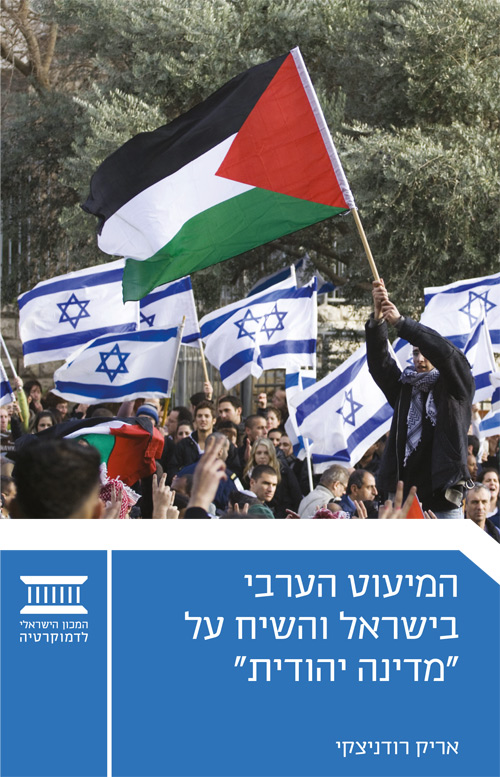
On Thursday April 14, 2011, IDI convened a full-day symposium that explored attitudes of Israeli Arabs towards the idea of the “Jewish Nation State." Conducted under the auspices of IDI’s Nation State project, this event was headed by IDI Senior Fellow and Israel Prize laureate Prof. Anita Shapira.
Full video coverage of this event, which was broadcast live on the IDI website, can be found at the bottom of this page (Hebrew). A video interview with Prof. Anita Shapira that was filmed prior to this event can be found here.
Symposium on the Arab Minority in the Jewish Nation State: Historical, Legal, and Social Dimensions Thursday, April 14, 2011 The Israel Democracy Institute, Jerusalem 9:30 am – 6:30 pm
SYMPOSIUM RATIONALE
The decade that has passed since the events of October 2000 has been marked by an increasing polarization and decline in relations between Israel’s Jewish majority and its Arab minority. At the parliamentary level, several bills that have been proposed by right-wing Knesset factions have been interpreted by the Arab public as attempts to bring about national and civic exclusion by legislative measures and to reinforce the national dominance of the Jewish majority. These proposals include the Nakba bill (May 2009), the proposed amendment to the Citizenship Law (October 2010), and the bill to cancel the official status of Arabic as a national language in Israel (May 2008).
In recent years, Israeli public opinion polls have shown increasing mutual alienation between Jews and Arabs. Among the factors that have contributed to this alienation are the Second Lebanon War (July–August, 2006), the military operation in Gaza (December, 2008–January, 2009), the Jewish public’s angry response to the four "Vision Papers of the Arabs in Israel, 2006-2007" published by the heads of the local Arab councils in Israel (December, 2006 – May, 2007), the violent incidents that occurred in Pekiin (October, 2007) and in Acre (October, 2008), and the involvement of public figures from the Arab sector in the flotilla to Gaza, with the political storm that ensued (June 2010). In recent months, tensions have intensified, following the publication of a letter in which a group of rabbis ruled that it is forbidden to rent apartments in Israel to Arabs and a letter in which a group of rabbis’ wives warned young Jewish women not to associate with Arab men. These developments have led Arab Israeli columnists and intellectuals to sum up 2010 as one of the most racist years experienced by Israel's Arab citizens in recent history.
IDI's Symposium on the Arab Minority in the Jewish Nation State provided a framework for in-depth discussion of the status of the Arab minority in the Jewish and democratic nation-state of Israel. Within this framework, sessions examined the historical, legal, and social factors related to minority-majority relations in Israel, and analyzed how they affect the attitudes of the Arab-Israeli public towards the character of the State of Israel and their standing in it. The first session focused on political and ideological aspects underlying the renewed national discourse in Arab society in Israel, the second session discussed legal and social perspectives on the status of the Arab minority in the Jewish nation-state, and the third was devoted to the nature of future relations between Jews and Arabs in Israel.
רציונל יום העיון העשור שחלף מאז אירועי אוקטובר 2000 עמד בסימן קיטוב מחריף והולך ביחסים שבין הרוב היהודי למיעוט הערבי בישראל. במישור הפרלמנטרי, הצעות חוק אחדות שהעלו סיעות הימין בכנסת, ובראשן הצעת חוק הנכבה (מאי 2009), הצעת התיקון לחוק האזרחות (אוקטובר 2010) והצעת החוק לביטול מעמדה הרשמי של השפה הערבית במדינה (מאי 2008), התפרשו בעיני הציבור הערבי כניסיונות לבסס באמצעים חקיקתיים את הדרתו הלאומית והאזרחית, ולקבע את הדומיננטיות הלאומית של הרוב היהודי.
סקרי דעת קהל שנערכו בשנים האחרונות העידו על העמקת הניכור ההדדי בין יהודים וערבים במדינה. בין הגורמים המשפיעים על תהליך זה ניתן להצביע על אירועי מלחמת לבנון השנייה (יולי-אוגוסט 2006) והמבצע הצבאי בעזה (דצמבר 2008 – ינואר 2009), התגובות הנזעמות בציבור היהודי על פרסום ארבעת מסמכי "החזון העתידי" (דצמבר 2006 – מאי 2007), התקריות האלימות שהתרחשו בפקיעין (אוקטובר 2007) ובעכו (אוקטובר 2008), ומעורבותם של אישי ציבור ערבים במשט לעזה ובסערה הפוליטית שהתחוללה בעקבותיו (יוני 2010). בחודשים האחרונים החריפה המתיחות בעקבות פרסום פסקי הלכה מטעם קבוצות של רבנים ורבניות האוסרים על השכרת דירות לערבים ביישובים יהודיים ומזהירים צעירות יהודיות שלא להתרועע עם צעירים ערבים. התפתחויות אלה הובילו פובליציסטים ואנשי רוח ערבים בישראל לסכם את שנת 2010 כאחת השנים הגזעניות ביותר שחוו לאחרונה אזרחי ישראל הערבים.
מטרת הכנס היא לדון במעמד המיעוט הערבי בישראל כמדינת לאום יהודית ודמוקרטית. במסגרת זו ייבחנו גורמים היסטוריים, משפטיים וחברתיים של יחסי מיעוט-רוב במדינת ישראל, וכיצד הם משפיעים על עמדותיו של הציבור הערבי בישראל כלפי אופי המדינה ומעמדו בה.
המושב הראשון יעסוק בהיבטים פוליטיים ואידאולוגיים העומדים בבסיס השיח הלאומי המתחדש בחברה הערבית בישראל. המושב השני ידון במעמדו של המיעוט הערבי במדינת הלאום היהודית מזווית ראיה משפטית וחברתית. המושב השלישי יוקדש לשאלת עתיד היחסים בין יהודים וערבים במדינה.
فكرة المؤتمر لقد شكّلت السنوات العشر التي مرّت منذ اندلاع أحداث أكتوبر 2000 علامة فارقة في التقاطب المتفاقم بين الأكثرية اليهودية والأقلية العربية في إسرائيل. على الصعيد البرلماني، نظرت الجماهير العربية في البلاد إلى مشاريع قوانين مقترحة من قبل الكتل اليمينية في الكنيست، وفي مقدّمتها مشروع قانون النكبة (أيار 2009)، اقتراح تعديل قانون المواطنة (الجنسية) (تشرين الأول 2010) ومشروع القانون لإلغاء المكانة الرسمية للغة العربية في الدولة (أيار 2008) كمحاولات لكي توطّد بوسائل تشريعية إقصاء الأقلية العربية من الناحيتين القوميّة والمدنية، وترسّخ الهيمنة القوميّة للأكثرية اليهودية.
وقد دلّت استطلاعات الرأي التي جرت في السنوات الأخيرة على ازدياد هوّة الاغتراب المتبادل بين اليهود والعرب في الدولة. من بين العوامل المؤثرة على هذه العملية يمكن الإشارة إلى وقائع حرب لبنان الثانية (تموز - آب 2006) والعملية العسكرية في غزة (كانون الأول 2008 – كانون الثاني 2009)، ردود الفعل الساخطة في الجمهور اليهودي على نشر وثائق التصوّر المستقبلي الأربعة (كانون الأول 2006 – أيار 2007)، المواجهات العنيفة التي وقعت في قرية البقيعة (تشرين الأول 2007) وفي عكا (تشرين الأول 2008)، ومشاركة شخصيات جماهيريّة عربيّة في القافلة البحرية إلى غزة وفي العاصفة السياسية التي أثيرت في أعقابها (حزيران 2010). وقد ازداد في الأشهر الأخيرة التوتّر على أثر نشر الفتاوى الدينية التي أصدرها عدد من الحاخامات اليهود، رجالاً ونساءً، مناهضة لتأجير شقق سكنية للعرب في البلدات اليهودية، وتحذّر الفتيات اليهوديات من معاشرة الشباب العرب. وقد حَدَتْ هذه التطوّرات ببعض الكتّاب والصحافيين العرب في إسرائيل إلى اعتبار عام 2010 كأحد الأعوام الأكثر عنصرية والتي شهدها المواطنون العرب في إسرائيل في الفترة الأخيرة.
يهدف المؤتمر إلى تناول مكانة الأقلية العربية في إسرائيل باعتبارها دولة قوميّة يهودية وديمقراطية. وسوف تدرس، في هذا الإطار، العوامل التاريخية، القانونية والاجتماعية للعلاقات بين الأكثرية والأقلية في دولة إسرائيل، وكيفية تأثيرها على مواقف الجمهور العربي في إسرائيل تجاه طابَع الدولة ومكانتِهِ فيها.
تتناول الجلسة الأولى النواحي السياسية والأيديولوجية في صُلب الخطاب القوميّ المتجدد في المجتمع العربي في إسرائيل. وتتناول الجلسة الثانية مكانة الأقلية العربية في دولة القوميّة اليهودية من وجهتي النظر القانونية والاجتماعية. وتتناول الجلسة الثالثة مسألة مستقبل العلاقات بين اليهود والعرب في الدولة.
سيتمّ نشر البرنامج المفصّل للمؤتمر قريبًا.
FULL PROGRAM
|
9:30 am – 10:00 am |
Registration and Greetings |
|
10:00 am – 12:30 pm |
Session One: The Renewal of National Discourse in Arab Society in Israel
Chair: Prof. Anita Shapira, Israel Democracy Institute; Tel Aviv University
Presenters:
- Dr. Adel Manna, Beit Berl Academic College; Van Leer Institute, Jerusalem
"From Discourse of Survival after the Nakba to Discourse of National Minority Rights in a Democratic State"
- Prof. Oded Haklai, Queen's University, Kingston, Ontario
"From Passivity to Palestinian Nationalism: Changes in Arab Politics in Israel—A Comparative Perspective"
- Dr. Mahmoud Yazbak, University of Haifa
"Between My People and My Country: Palestinian Citizens in Israel"
Respondent: Prof. Hillel Frisch, Bar-Ilan University
Discussion |
|
12:30 pm – 1:00 pm |
Lunch Break |
|
1:00 pm – 3:30 pm |
Session Two: The Status of the Arab Minority in the Jewish Nation-State
Chair: Prof. Yedidia Stern, Israel Democracy Institute; Bar-Ilan University
Presenters:
- Prof. Yedidia Stern, Israel Democracy Institute; Bar-Ilan University
"Equality for Minorities: Rights and Identity"
- Prof. Aziz Haidar, Van Leer Institute, Truman Institute;
David Yellin College "Israel: The Nation State of all Nations Except the Arabs”
- Prof. Haim Sandberg, College of Management, Academic Track
"Real Estate and the Debate on the Identity of the State"
Respondent: Dr Yousef Jabareen, University of Haifa; Dirasat Center for Law and Policy
Discussion |
|
3:30 pm – 4:00 pm |
Coffee Break |
|
4:00 pm – 6:30 pm |
Session Three: The Future of Jewish-Arab Relations in Israel
Chair: Prof. Mordechai Kremnitzer, Israel Democracy Institute
Presenters:
- Dr. Rabah Halabi, Hebrew University of Jerusalem
"The Inevitable Collision in Relations between Jews and Palestinians in Israel"
- Professor Yitzhak Reiter, Ashkelon Academic College; Jerusalem Institute for Israel Studies
"The Challenge of Integrating a National Minority into a Democratic Nation State"
- Prof. Ramzi Suleiman, University of Haifa
"I Dreamed of an ‘Old-New Land’: Reflections on Majority and Minority Psychology in the Jewish Nation State"
Respondent: Dr. Mordechai Kedar, Bar-Ilan University
Discussion |
SUMMARY OF THE PROCEEDINGS
SESSION 1: THE RENEWAL OF NATIONAL DISCOURSE IN ARAB SOCIETY IN ISRAEL
Chair: Prof. Anita Shapira, Israel Democracy Institute; Tel Aviv University
Dr. Adel Manna of Beit Berl College and the Van-Lear Institute opened the session with a presentation entitled "From Discourse of Survival after the Nakba to Discourse of National Minority Rights in a Democratic State." He stated that he believes the situation today is much worse than it was from 1999-2001. Since the events of October 2000, there have been indications of a growing rift between Jews and Arabs. During the past two years, it seems as if the right-wing government has been pouring oil on the flames, making coexistence an impossible mission. In his opinion, a growing process of apartheid is developing in Israel. On the one hand, Israel's Arab citizens are demanding more and more rights, while on the other hand, the state is suppressing Israeli Arabs with its aggressive policy.
According to Dr. Manna, the Arab leadership is no longer submissive. It is now a charismatic leadership that is defiant against the Israeli majority. This is dangerous from the Jewish perspective, but in his opinion, it is a sign of the awakening of the indigenous Arab identity. Arabs in Israel today are able to break the barrier of fear. The observance of Land Day in March 1976 was an expression of the fact that Israel’s Arabs were no longer willing to accept the expropriation of their land. Dr. Manna continued his historical review by noting that the period after the signing of the Oslo accords in September 1993 was the peak of optimism regarding equal rights for Arabs in Israel; since 1995, however, Israel's prime ministers have caused immense damage to the peace process and to the matter of equality, and they continue to do so. Ehud Barak succeeded in confusing the Israeli Left in October 2000, but he strayed very far from the path of Yitzhak Rabin, and he destroyed hopes for a real peace in Israel.
In Dr. Manna's opinion, Arab leaders in Israel have learned from Jewish leaders how to use the media to their advantage. Since Israel has not been able to provide a common framework in which the Arabs will be true partners, the Arabs have taken to making their positions more extreme in order to make the headlines. According to Dr. Manna, however, Jews consider proud Arabs who demands equal rights to be extremists and therefore harass them. In his opinion, the recent developments in the Arab world, which he sees as positive, should be taken seriously: Arab citizens have been breaking the barrier of fear. While Salam Fayyad is going to ask the United Nations for independence, the situation in Israel is worsening and becoming more extreme, and will eventually lead to a policy of apartheid. In Dr. Manna's view, Jewish society in Israel must decide between an independent Palestinian state alongside Israel and a "state of all its citizens" between the Jordan River and the Mediterranean Sea.
Prof. Oded Haklai of Queens University in Kingston, Ontario, entitled his comparative presentation ""From Passivity to Palestinian Nationalism: Changes in Arab Politics in Israel." In his view, Arab politics, like all Israeli politics, is sectoral. A central concept in such politics is the concept of "indigenousness." The use of this concept has widespread impact on the way that Israel's Arab citizens understand their situation in Israel and on the rights they demand for themselves. Covenants that have been adopted in the last twenty years grant an indigenous minority broad autonomy in a variety of areas, such as bilingualism, the right of veto, and proportional representation in state institutions. An indigenous population could opt to demand extensive autonomy in the form of an independent parliament, education, and universities.
However, in contrast to the desire for indigenous isolation, it is evident that Arab Israelis have integrated into Israeli politics, as they have accepted the democratic game in Israel as the only game in town. In this respect, there is hardly any political violence. The events of October 2000 shocked everyone precisely because they were exceptional. In addition, the Arab parties are becoming more and more sectoral and are attacking each other just like the parties in the Jewish sector. Organizations dedicated to the interests of the Arab public in Israel and to the promotion of its national aspirations have been established, in addition to legal centers focusing on human and civil rights, such as Adalah and Mossawa. There is also a relative large number of media outlets in Arabic. In this respect, there is room for optimism, since the Arab community accepts the rules of the democratic game. Ironically, while most intellectuals in the Arab sector do not see themselves as belonging to Israeli culture, politics, and public life, beyond their pronouncements, it would seem that they have accepted the rules of the political game.
Dr. Mahmoud Yazbak of the University of Haifa entitled his presentation "Between My People and My Country: Palestinian Citizens in Israel." He asserted that he believes the Palestinian population in Israel has come to terms with the establishment of Israel and the “Nakbah.” This simple fact will continue to contain many tensions for as long as the Arab-Israeli conflict continues. The State of Israel is located in the Middle East, and the end of the conflict will not undermine the affinity that Arabs in Israel have for the other Arabs in the region. When peace comes, Israel will not be able to ignore the cultural connection between its Palestinian citizens and the rest of the Middle East.
Dr. Yazbak noted that after the 1967 War, the pride that the Palestinians had lost began to return. This process began with the renewed union between the Arabs in Israel and the Arabs in the Gaza Strip and the West Bank, continued during the 1973 War, which was perceived as a partial victory, and was finally expressed in the independent action that was taken on Land Day in 1976.
The Oslo process was a breaking point for Israel's Arab population, because it removed Israel's Palestinian citizens from the domestic political game almost entirely. In Dr. Yazbak's opinion, from that point on, Israel's Arab population began to behave completely differently. That’s when their demand for collective rights began to develop, in the form of a request to define the Arab population as a national minority. After October 2000, there was a sense that the struggle had failed: after people had taken to the streets feeling that civil change was on the way, protestors encountered violence and were killed. In Dr. Yazbak's opinion, as a result of that experience, Israel began to see itself as a democracy that defends itself against its Arab citizens; it developed a perception that the Arab minority is a danger and an enemy to the state. In his opinion, this sentiment is reflected today in the prohibition to rent apartments to Arabs in Safed and other places in the country. Dr. Yazbak noted that on a personal level, when he is asked "do you see yourself as an Israeli?" he has difficulty answering the question.
Prof. Hillel Frisch of Bar-Ilan University, the respondent to the opening session, said that he believes that the State of Israel is characterized by remarkable political freedom that allows broad political participation. In his opinion, the problem is not on the political level, but rather is social and conceptual: Jewish Israelis are trying to frame the political problem as "Arab terrorism against Israel," while Israel's Arabs depict every aspect of the political problem as "apartheid." In his opinion, there is generally an appropriate balance in the distribution of rights between the majority and the minority in Israel and there is a big difference between apartheid and the reality in Israel today.
Prof. Moshe Arens, who was in attendance, argued that what is happening in Israel does not resemble apartheid at all. In his opinion, the situation is better than it was 10 years ago, and is especially good when you consider the fact that in 1948, there was an outright war between the two populations. Prof. Arens pointed out that the IDF has a Druze major general, the current Knesset has an Arab Deputy Speaker, and Arab workers are seen as equals in the Jewish public sphere. In his opinion, there is rapid integration of Arabs into Israel's Jewish society.
SESSION 2: THE STATUS OF THE ARAB MINORITY IN THE JEWISH NATION-STATE
Chair: Prof. Yedidia Stern, Israel Democracy Institute; Bar-Ilan University
Prof. Yedidia Stern, Vice President of Research at IDI, opened the session by saying that the subject of the symposium is one of IDI’s central research interests and that the question of the nature of the state, in terms of both its national and democratic aspects, is of great concern to the Institute's researchers.
Following his introduction, Professor Stern's presentation "Equality for Minorities: Rights and Identity" focused on what is happening inside the "Green Line" rather than beyond it. He suggested four areas in which equality between the majority and minority in Israel is required. The first area is equality on the level of the individual civilian. In his opinion, this is where the State of Israel fails, as it does not grant equal civil rights. This can be seen from the socio-economic gap between Arabs and Jews, the poor quality of the Arab education system, the nature of the health and welfare infrastructure, and the exclusion of Arabs from the sphere of employment and the public sphere. This data which he presented, which was based on IDI's Israeli Democracy Index, painted a harsh picture of the attitude of Jewish society in Israel towards the Arab minority.
Prof. Stern pointed out that, unlike members of other communities in Israel, who are “Other,” Israeli Arabs are not satisfied merely with equality as individuals; rather, they seek equality on a social level as well, and strive for a sense of belonging to an autonomous society. In his opinion, modern society has taught us that equality of individual rights is insufficient; equality must also be fostered between communities and cultures, and the language, culture, and history of the Arabs in Israel must be granted an equal status.
Beyond the first level of equality—the individual civil level—Prof. Stern identified three additional levels of “discourse of collective rights.” The first type of discourse asserts that Israel's Arab citizens must be granted unique rights by virtue of their being Arabs, but must receive these rights as individuals. The second type of discourse affirms that Israel's Arabs have rights as a group, and should have autonomy that is separate from the general public. This approach elicits concern that a "state within a state" is being created and that detachment and hostility are being fostered. The last level of discourse seeks to strip the public sphere of markings of the collective identity of the majority group; that is, it advocates that Israel become a state of all its citizens with a neutral public and legal sphere. According to Prof. Stern, this type of appeal can be found in the vision documents of Israeli Arabs, and it presents Israeli nationalism as a colonialist fiction and a non-authentic manifestation of emotion, thought, and expression. Prof. Stern sees this demand as unreasonable, however, for it violates the right of Jewish self-determination.
According to Prof. Stern, we are in a tragic situation, in which there is a huge gap between reality and expectations. The first level of equality, which is the most basic of all, is not being implemented for no apparent reason, while the fourth level of equality, which is the most extensive of all, is the type of equality that is being demanded by the Arab public in Israel, and it is not at all compatible with reality. He noted that in formulating its draft constitution for the State of Israel, the Israel Democracy Institute adopted the second level of equality—that is, the granting of individual equality by virtue of belonging to a minority group.
Prof. Aziz Haidar of the Van Leer Institute, the Truman Institute, and David Yellin College followed with a presentation entitled "Israel: The Nation State of all Nations Except the Arabs.” He opened by asking what the meaning of "a Jewish nation state" is. He pointed out that the Israeli population registry does not recognize the term 'nation' but only “religion” — Jews, Muslims, Christians, and others. In addition, Jews living outside of Israel have more rights in Israel than Israel’s Arab citizens. As a result, Israel’s Arab public have come to ask for their rights as an “indigenous people” — a status that is recognized in many countries and which is accompanied by civil autonomy, social autonomy, and in many cases territorial autonomy as well.
With regard to territory and land, Prof. Haidar said that the land regime in Israel is separated, which he sees as an apartheid system. He reported that 16% of the population of Israel holds 4% of the land, and the perception is that all land that is owned by Arabs is at the expense of the Jews and is detrimental to them. In his opinion, a further manifestation of apartheid can be seen from the lack of a state television channel that serves the Arab public and from the irrelevance of the Arab public in the Israeli political sphere. In addition, he asserted, Israel is trying to limit the numbers of its Arab population through the Law of Return and the Citizenship Law, and the growing trend of denying family unification severely discriminates against Arab citizens by determining who they may or may not marry. Moreover, he sees the immigration to Israel of people who do not have a religious Jewish identity from the former Soviet Union and Ethiopia as an indication of Israel’s attempt to increase the population of “non-Arabs” in Israel rather than of its Jewish population per se. In his opinion, the general impression is that Israel has, in a sense, declared war on the Arab public and is afraid that it will grow stronger.
According to Prof. Haidar, a nation state that does not recognize the national uniqueness of its minorities becomes a nationalistic state, and this is what is happening in Israel. In his opinion, a nation state must respect other nations and their desire for independence and self-determination. As he sees it, the “Future Vision” documents of Arabs in Israel strongly demand recognition, partnership, and accessibility. It is on the basis of these demands that Prof. Haidar would like to conduct negotiations between the two groups, Jewish and Arab.
Prof. Haim Sandberg, of the Law School of the College of Management, continued with a presentation on "Real Estate and the Debate on the Identity of the State." An expert on property law, Prof. Sandberg focused on the gap between the official Israeli-Jewish position and the position that emerges from the Arab vision documents in Israel. The first issue that he discussed was the expropriation of land from Arabs and the compensation received in return. Prof. Sandberg presented figures showing that until 1964, most of the land that was confiscated was in villages that were no longer populated after 1949. Israel's position rules out the possibility of the refugees returning to their homes and offers partial financial compensation or alternative land in return. The position that is opposed to this asks that Israel recognize its responsibility for the Palestinian Nakbah, grant financial compensation to groups and individuals, and give Palestinian refugees the right of return to their original homes.
The second issue discussed by Prof. Sandberg is the use the Israel Land Authority’s inventory of public lands, which constitute over 90% of the land in Israel. Prof. Sandberg presented figures showing that land that is sold to private owners is mostly sold to Arabs, the establishment of new communities is done in accordance with the proportion of the group in the general population, and the majority of this land is public lands such as forests or open areas for public use. According to this data, there is no significant discrimination toward Arab citizens with regard to land allocation. With regard to these issues, the Arab vision documents demand an allocation of resources on a collective basis that incorporates affirmative action, and ask to do away with collective allocations to the Jewish population.
Professor Sandberg averred that the situation is not as bad as it often seems. The Israeli Supreme Court recognizes affirmative action with regard to the allocation of land to the Arab public. In his opinion, the data on land expropriation, compensation for expropriation, and the distribution of land shows a relatively balanced picture.
Dr. Yousef Jabareen, of the University of Haifa and the Dirasat Center for Law and Policy, responded to Prof. Sandberg’s presentation and argued that the picture is not balanced at all. He asserted that there is exclusion of Arabs in the public sphere, the JNF does not sell and lease land to Arabs, and the Supreme Court's recognition of affirmative action stems from its recognition of the fact that there is indeed discrimination. According to Dr. Jabareen, discrimination exists in three main areas: inequality before the law; discrimination in the allocation of resources; and in the social-public sphere.
Dr. Jabareen asserted that a discussion about land must include the fact that organizations such as the JNF and the Jewish Agency have received a special legal status when it comes to the allocation of state land, while they see themselves as committed only to the Jewish public and do not see themselves as bound by, for example, the Supreme Court's decision on the Qa’adan case [a case in which the court ruled in March 2000 that an Arab family could not be denied permission to build a house in the town of Katzir, which had an exclusively Jewish population.] He also pointed out that the Arab community is not represented in organizations such as the JNF or the Jewish Agency.
Dr. Jabareen offered several options for the granting of full equality. The first is "to ‘civilize’ the state” — that is, to neutralize Israel’s symbols and to strip its public sphere of markers of a particularistic identity that excludes minority groups. The second option is to grant the Arab public as a group the same rights that are granted Israel’s Jewish population as a group. The third option is to create what he termed “an equal partnership" comprised of the following components: a public sphere that is free of discrimination and racism; equal partnership in all the country's resources (whether political, material, cultural, symbolic, or resources for immigration and citizenship;) a historical component in which the State's relation to the Arab-Palestinian minority is based on principles of justice; and, an internal democratic component that guarantees minority autonomy in managing education, religion and culture. In Dr. Jabareen's opinion, it is possible to give full equality to both groups — Arabs and Jews — while at the same time maintaining the unique character of each.
SESSION THREE: THE FUTURE OF JEWISH-ARAB RELATIONS IN ISRAEL
Chair: Prof. Mordechai Kremnitzer, Israel Democracy Institute
Prof. Mordechai Kremnitzer, Vice President of Research at the Israel Democracy Institute and Professor Emeritus at the Hebrew University, opened the third session by expressing concern about the isolation of the Arab public that is taking place in Israeli society. He sees this process as connected to the sectoralization of groups in Israeli society and the worsening of the state's attitude towards the Arab minority. In his opinion, Jewish society in Israel is pessimistic about the possibility of reaching a political settlement with a Palestinian political entity; as a result, many members of Jewish society in Israel see the Arab public as hostile to Israel's existence. In Prof. Kremnitzer’s opinion, the Arab and Jewish populations of Israel do not read each other well, and issue statements that are perceived as declarations of war against each other even if they are not intended as such. Public statements, he continued, should be weighed very carefully, with each side considering what the statement will mean to the other side, as an expression of a mutual desire to create a better common future.
Dr. Rabah Halabi of the Department of Education at the Hebrew University in Jerusalem, entitled his session "The Inevitable Collision in Relations between Jews and Palestinians in Israel." Having been involved in meetings between Jews and Palestinians for many years, Dr. Halabi drew conclusions from his encounters that are applicable to the reality in the field. In his opinion, when Jewish and Palestinian citizens of Israel meet, there are five stages in the encounter. The first stage is a stage of “putting out feelers,” in which the Palestinian side minimizes itself, which enables the Jewish side to take a liberal approach. In the second stage, the Palestinian side expresses a growing degree of self confidence and gradually increases its demand for rights. In the third stage, the Jewish group feels threatened by the change and is concerned that an attempt is being made to erase its Jewish identity; accordingly, at this stage, the Jewish group tries to return the Palestinians to the initial state of contraction that characterized them at the outset. The fourth stage is a stage of “walking in place,” in which a sense of being at a dead end leads to a worsening of the conflict and expressions of aggression. Sometimes a fifth stage is reached, in which true dialogue is created, and there is a real examination of the two identities. This stage is only reached when the Jewish group accepts the Palestinians as a group and not just as individuals. In this analysis, the transition between the various stages is driven by the Palestinians and takes place as a result of the intensification of the Palestinian position. Reaching the stage of dialogue, in Dr. Halabi’s opinion, depends largely on the Jewish group and on its acceptance of the Palestinian group’s self-determination.
According to Dr. Halabi, these stages have a historical parallel: Until 1966, when military rule was abolished, the first stage of putting out feelers took place. Afterwards, and after the Six Day War in 1967, the Palestinians began to be strengthened—a process that continued through the events of Land Day in 1976, the signing of the Oslo Accords, and the Israeli military withdrawal from Lebanon in May 2000. The third stage began with the events of October 2000, when the Jewish public's fear of the internal strengthening of the Palestinians increased greatly. Dr. Halabi's analysis of hundreds of meetings led him to conclude that the sense of impasse and power struggles is in the hands of the stronger side, namely the Israeli side. The Palestinian side, in contrast, is fearful and dependent on the Israeli public. Accordingly, it is incumbent on the Israeli public to reach out to the Palestinians.
Prof. Yitzhak Reiter, who served as Deputy Advisor on Arab Affairs to three Israeli Prime Ministers, is currently a lecturer in political science at the Ashkelon Academic College and Hebrew University and is a researcher at the Jerusalem Institute for Israel Studies. He continued with a presentation entitled "The Challenge of Integrating a National Minority into a Democratic Nation State." Prof. Reiter argued that the relationship of majority-minority between the Jewish and Arab publics in Israel is unique in the world, historically, demographically-regionally, and in terms of the Arab-Israeli conflict and the security issues that arise from the conflict. Since the problem is unique in all these areas, its solution must also be unique and cannot be based on foreign models. In his opinion, the State of Israel has defined itself primarily as a Jewish state and only then as a democratic state. This means that Israel's position is that the Arab minority must be given maximum civil rights with the most minimal possible violation of the collective rights of the Jewish majority.
Prof. Reiter suggested three ways in which Arab society can be integrated into the Jewish state. In his opinion, no efforts are being made to foster such integration today; on the side of the Israeli government, this is because of the Arab-Israeli conflict, while on the Palestinian side, it is a result of their aversion to the state, its identity, and its institutions. The first form of integration involves going through the motions (incrementally), which Prof. Reiter believes is what the Israeli government is doing at present. In his opinion, this form of integration is an outgrowth of fear, repression, and an almost exclusive focus on the economic aspect of the issue, and fosters alienation, fear, and tension. The second form of integration involves partial affirmative action as a collective right of the minority, as was the case during the Oslo process. The third form involves a comprehensive systemic and conceptual change that is based on dialogue between the leadership and organizations in both Jewish and Arab societies.
This change must be based on a change from a discourse of exclusion to a discourse of inclusion; it must include dialogue that barely exists in civil organizations in Israeli society and among Israel's political leaders. In Prof. Reiter’s opinion, this change must move Israel's definition as a Jewish state in a way that prevents discrimination against the Arab public, or the most minimal amount possible of discrimination against Israel's Arab population. This type of change must be combined with a deepening of democratization in Israel, while creating a civil partnership that will be able to overcome national differences.
Prof. Ramzi Suleiman, of the Department of Psychology at the University of Haifa, presented an overview of the Arab minority in Israel from the perspective of an external critic, who he sees as comparable to the protagonist of Herzl's book Altneuland. This study, which he entitled "I Dreamed of an ‘Old-New Land’: Reflections on Majority and Minority Psychology in the Jewish Nation State," led him to the following conclusions:
Firstly, in Prof. Suleiman’s opinion, contrary to the official Israeli position and to the values affirmed by the Declaration of Independence, there is serious inequality in Israel. In his opinion, not only is there inequality, but an active and ongoing effort is being made to reduce the living space of the Palestinian minority. The second component, in Prof. Suleiman’s opinion, is racism. According to Prof. Suleiman, this discrimination is based on and exacerbated by suspicion and racist feelings: fear of speaking in Arabic; fear of living in proximity to each other; and a desire to exclude the Arab community from the public sphere.
The third component is Israel's rapid advancement towards a situation in which there is a dictatorship of the majority without regard for minority rights, concomitant to a decline in education towards civic and democratic values in order to strengthen Jewish values and national sentiment. The fourth component is the existence of what Prof. Suleiman considers the oxymoronic entity known as the "Jewish and democratic state," which is fiercely defended by even the greatest Jewish intellectuals and writers in Israel. In his opinion, this entity is an oxymoron because public opinion polls have proven that the Israeli public sees Jewish identity as far more important than the values of democracy. According to Prof. Suleiman, the attitude of Jewish society in Israel towards the Arab minority is generally patronizing. Even the liberal Left relates to Arabs as if they do not have rights; Prof. Suleiman, however, believes that the majority has a moral obligation to tend to the Arab minority. This concept resembles "noblesse oblige" or philanthropy; it does not see the Arab public as equal to the Jewish majority, and presupposes that there is Jewish hegemony on what takes place in the Israeli public sphere.
Prof. Suleiman concluded his review on a pessimistic note, pointing out that where he sought to find freedom, he found oppression.
Dr. Mordechai Kedar, a lecturer in the Department of Arabic at Bar-Ilan University, was the respondent to this session. In his assessment, many of the discussions during the course of the day did not lay out the full severity of the problem. In his opinion, the State of Israel is based on Jewish dominance that is supported by a demographic majority that is preserved zealously, and he does not want this situation to change, lest the state and the Zionist enterprise lose the meaning of their existence. As he sees it, the Jewish population in Israel lives in constant fear, especially after the experience of the Holocaust and in light of the fact that Israel is situated in a Middle East in which radical Islam is on the rise and, in his opinion, this fear is justified.
According to Dr. Kedar, Jewish dominance in Israel is a given, and a commitment to change is required of the Arab public. Were the Arabs in Israel to want real political change, they would unite to create one big political party that would have great impact on political life in Israel. In Dr. Kedar’s opinion, if this is not being done, it is likely that the current situation is good for the Arab public. Dr. Kedar objected to attempts to define Israel as an apartheid state, since there are not really separate frameworks for health services, or separate infrastructures for water, electricity, transportation, etc.
Dr. Kedar concluded by reminding the participants that the Islamic Movement was not mentioned during the debate. As an expert on that movement, he tried to present its position as he understands it. In his assessment, the Islamic Movement sees the Jews as a collection of religious communities and not as a national entity, and sees the Land of Israel as a special endowment (Waqf) from the time of the Caliph Umar Ibn Al-Khattab; non-Muslims have no rights to this land and must live in it as dhimmis (protégés).
Prof. Mordechai Kremnitzer summed up the day saying that despite the flaws of Israeli democracy in relation to the Arab minority, Israel still maintains the right to protest and free speech, and its residents can discuss issues related to majority-minority relations freely. In his opinion, recently-enacted-laws endanger the existence of these fundamental freedoms, which must be preserved rigorously.
|