


Eli Hurvitz Conference on Economy and Society 2025
Save the date! | May 27-28, 2025 | Live | By Invite Only
- Participation by invitation only
- Live

Eli Hurvitz Conference on Economy and Society 2024
Save the date! | May 21-22, 2024 | Live | By Invite Only
- Participation by invitation only
- Live

Eli Hurvitz Conference on Economy and Society 2023
Save the date! | May 30-31, 2023 | Live | By Invite Only
- Live
- Hebrew
“No Other Democracy in the World” – An Emergency Conference on Threats to Judicial Independence
Former Justices and Justice Ministers convene in Jerusalem for an emergency international conference on judicial independence in Israel.
- Live
- English
- Open to the public
- Live
- English
- Registration required
- Open to the public
Steps Toward Drawing Up a Constitution
A comparative and local view on steps necessary to formulating a Constitution for Israel - The Israel Democracy Institute in conjunction with The Israeli Law Professors' Forum for Democracy
- Open to the public
- Live
- Hebrew
Perspectives on Government Corruption | The Politicization of the Fight Against Corruption
Launch of Publications: Perspectives on Government Corruption and Corruption and Voting January 10, 2023 | 10 AM–2 PM The Israel Democracy Institute, 4 Pinsker St., Jerusalem
- Live
- Hebrew
Politics and Administration in Ultra-Orthodox Local Authorities | 2022 Annual Conference of the Ultra-Orthodox Society in Israel Program
Conference to mark the publication of Ariel Finkelstein’s new book “Politics and Administration in Haredi Local Authorities”
- Live
- Hebrew
- Open to the public
Watch IDI Experts at Times of Israel Conference on Judicial Reforms
Times of Israel is holding a special online event to discuss the current judicial reforms under debate and their possible implications for Israeli democracy. The event will be live streamed here on IDI’s English website in addition to the Times of Israel website.
- Live

Mamlakhtiyut in Israeli Society and Politics
The conference is part of the Israel Week for Social Solidarity sponsored by the Anti-Defamation League and coincides with the publication by the Israel Democracy Institute of Mamlakhtiyut in the Twenty-First Century
- Participation by invitation only
- Open to the public
- Hebrew
- English
Election 2022 - Sharing the Responsibility
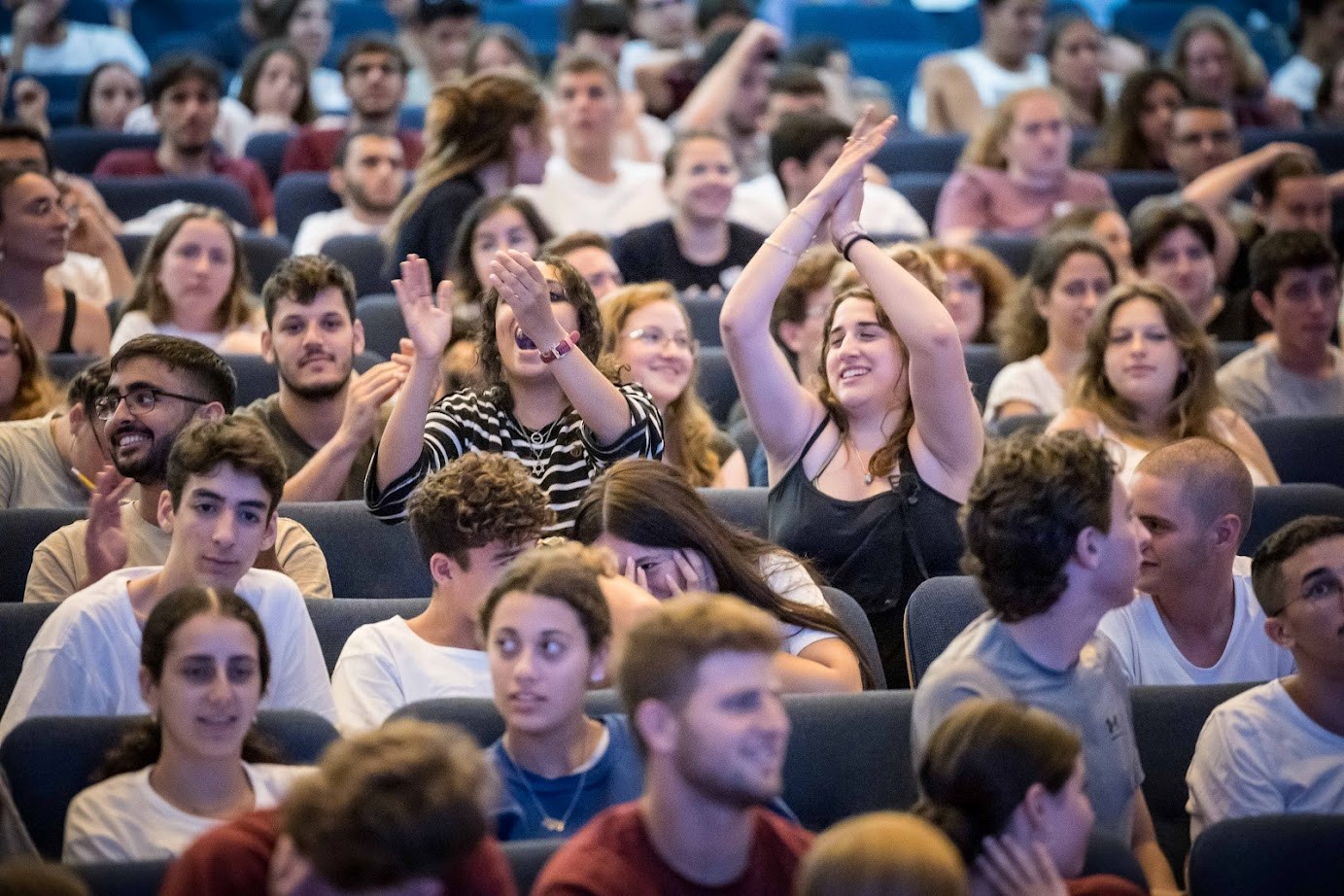
The conference, organized by the Israel Democracy Institute and the Yigal Allon Center and attended by some 1,200 students from pre-military academies (mechinot) throughout Israel, and held this afternoon
- Participation by invitation only
- Hebrew
- Hebrew
- Live

- Open to the public
- Live
- English
- Hebrew
- Participation by invitation only
- Hebrew
- Live
- English
- Open to the public
- Live
Education for Democracy in a Divided Society: The Israeli Case
The conference focuses on the challenges of implementing education towards democracy among different sectors of Israeli society while providing an international comparison. Participants will included educators from the Ministry of Education and local authorities, academics and civil society organizations.
- Hebrew
- Live

- Hebrew
- Live
- English
- Hebrew
- Live
- Open to the public
100 Days and Counting: Can Israel’s New Government Do More Than Merely Survive?
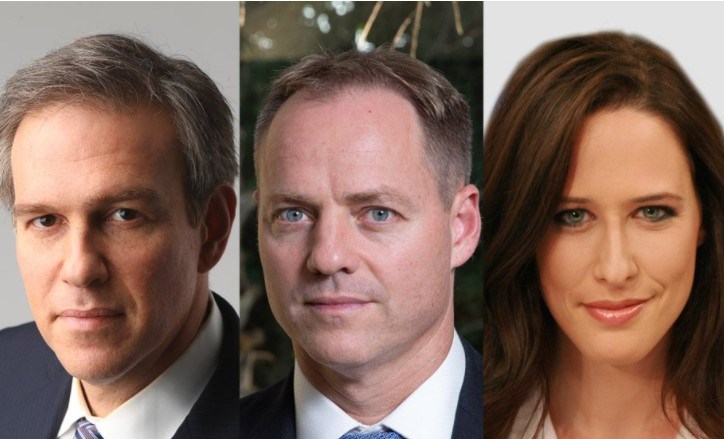
Join Bret Stephens, Yohanan Plesner and Yonit Levi for insightful analysis as they assess the new government’s durability and its capacity to change the trajectory of Israel’s domestic policies and relations with the world in general and the US in particular.
- Open to the public
- English
- Live
Israel at a Crossroads
Can the cycle of elections be broken, and what will it mean for Israel and for the US-Israel relationship? Jeffrey Goldberg, Yohanan Plesner, and Yonit Levi

Digital Election Campaigning
The roundtable discussion will focus on the regulation of digital election campaigning and the challenges arising from what is only partial regulation in preparation for the upcoming elections in Israel. This, following a new policy study "Digital Campaigns and its Threat to the Elections."
- Hebrew
- Live
- Open to the public

- Open to the public
- Live
- Hebrew
- English simultaneous translation

- Live
- English simultaneous translation
- Hebrew
- English
- Open to the public
- Hebrew
- Live
- Hebrew
- Open to the public
- English simultaneous translation
- English
- Open to the public
- Live
- Participation by invitation only
- English
- Open to the public
- Hebrew
- Live
Eli Hurvitz Conference on Economy and Society 2019
The Eli Hurvitz Conference focuses on long-term strategic issues of importance to the government and the state. The conference is based on research and professional discussions, and integrates a wide range of experts, government officials and businessmen.
- Hebrew
- Participation by invitation only
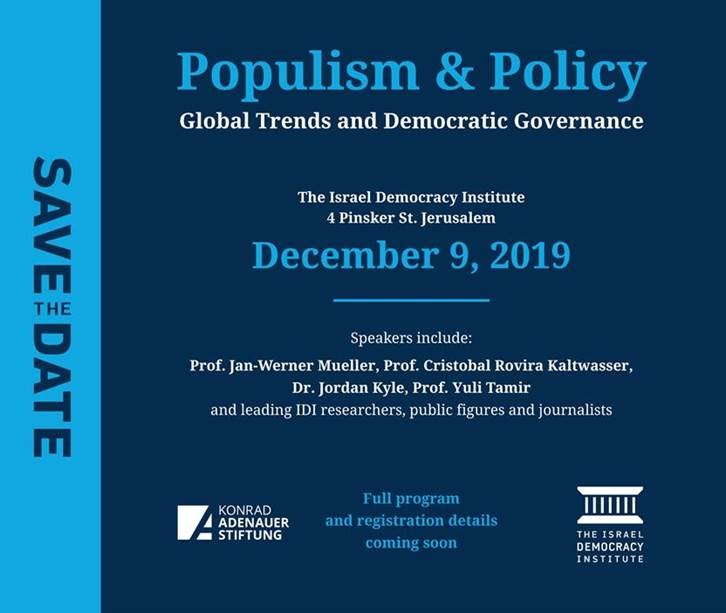
Populism & Policy: Global Trends and Democratic Governance
Speakers include: Prof. Jan-Werner Mueller, Prof. Cristobal Rovira Kaltwasser, Dr. Jordon Kyle, Prof. Yuli Tamir and leading IDI researchers, public figures and journalists. The conference is in partnership with Konrad Adenauer Stiftung
- Open to the public
- English
- Live
- English simultaneous translation
- Hebrew
- Live
- Open to the public
- Open to the public
- Hebrew
- Open to the public
- Hebrew
- Open to the public
- Hebrew
- Open to the public
- Hebrew
- English
- Open to the public
- Live
- Open to the public
- Hebrew

From the Margins to the Fore: Religious Zionism and Israeli Society
The Israel Democracy Institute (IDI) is launching the publication of the book “From the Margins to the Fore: Religious Zionism and Israeli Society”, edited by Yair Sheleg
- Hebrew
- Open to the public
- Hebrew
- Open to the public
- Live
- Hebrew
- Open to the public
- Live
- Open to the public
- Live
- Hebrew
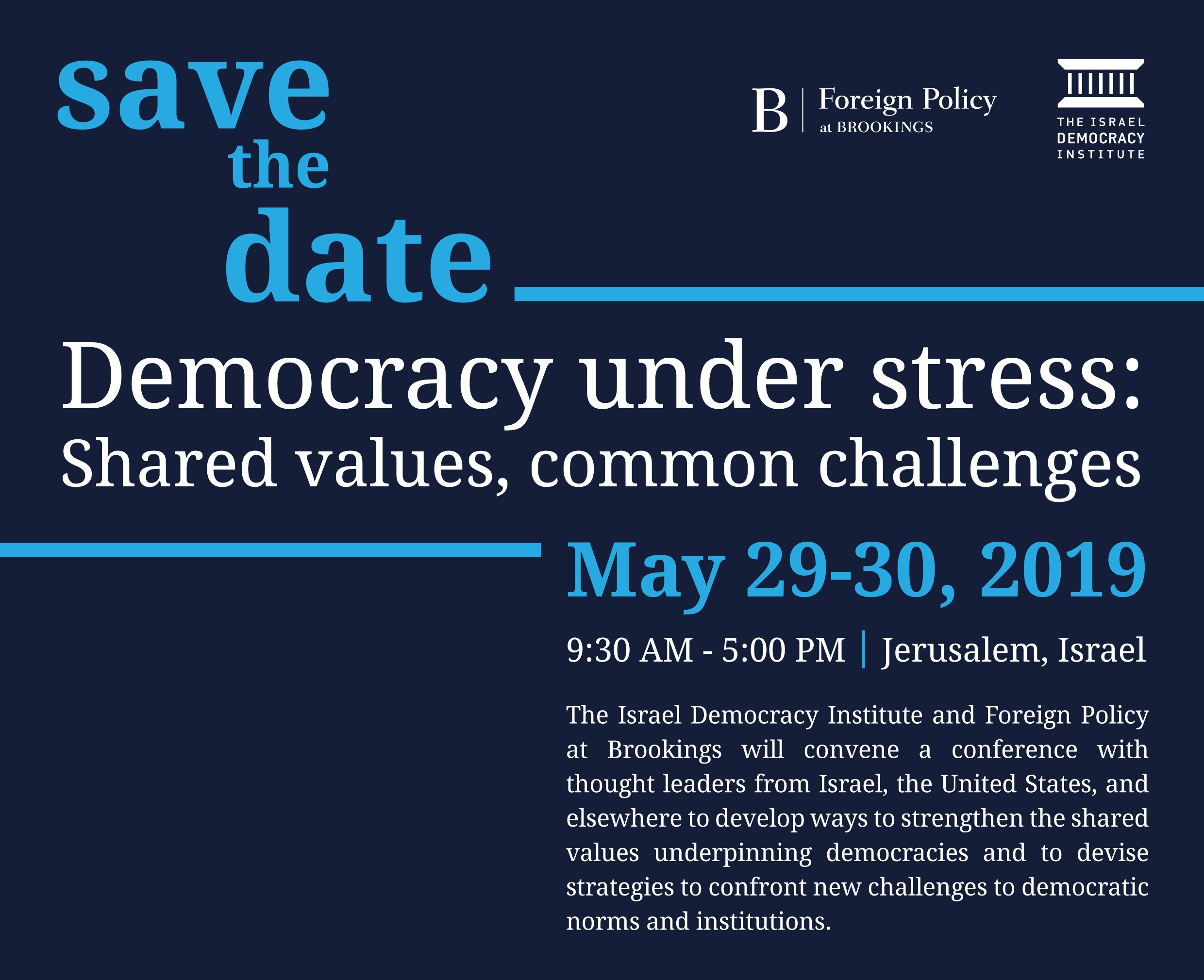
Democracy under stress: Shared values, common challenges
The Israel Democracy Institute and Foreign Policy at Brookings will convene a conference with thought leaders from Israel, the United States, and elsewhere to develop ways to strengthen the shared values underpinning democracies and to devise strategies to confront new challenges to democratic norms and institutions
- Live
- Participation by invitation only
- Participation by invitation only
Lessons Learned and Looking to the Future of Electoral Laws
The conference, chaired by Dr. Tehilla Shwartz Altshuler, Dr. Guy Lurie and Dr. Ofer Kenig, will focus on the need to amend the existing election campaign law and adapt it to the digital world, as well as on the role of the Central Elections Committee in the election process and its political role regarding the disqualification of lists and candidates
- Live
- Participation by invitation only
Proportionality in Public Policy: The Balance between Rights and Public Interests in Decision Making
The two day conference will be devoted to the theme of the place of rights considerations in the policy making process, focusing on the different products of our research
- English
- English simultaneous translation
- Hebrew
- Participation by invitation only
- Open to the public
- English
- Hebrew
- Open to the public
- Live

- Hebrew
- Participation by invitation only
- Live

Roundtable Discussion: The Status of the Arabic Language in Israel
The recently passed Nation State Law changed the status of Arabic from an official language in the State of Israel to a language with “special status". Although some may view this as only a symbolic measure, this decision has broad implications for the Israeli public. Our discussion will examine this change from a broad perspective and will relate to the many aspects of this issue. Among other things, we will discuss the study of Arabic in the education system, the presence of the Arabic language in the public and media arenas and language as a means for cultural expression.
- Open to the public
- Live
- Hebrew

- English simultaneous translation
- Live

2018 Israeli Democracy Index
The 2018 Israeli Democracy Index is presented to President Reuven Rivlin by IDI President Yohanan Plesner. The Democracy Index project, now in its 16th year, is conducted by the research team of the Guttman Center for Public Opinion and Policy Research at IDI, headed by Prof. Tamar Hermann. The study is based on a representative sample of 1,041 respondents, Jews and Arabs, and provides data on the situation of the Israeli democracy as measured by various international indices.
- Participation by invitation only
- Live
- Hebrew


- Hebrew
- Open to the public
- Live
- Participation by invitation only
- Hebrew
Combatting Online Hate Speech
As violent extremism grows in cyberspace, IDI and Yad Vashem team up to tackle online hate speech. Meeting on November 7 for the first of a series of international workshops intended to formulate policy recommendations for governments and social media corporations.
- Participation by invitation only

Conversion in Israel: Vision, Achievements and Challenges
Book launch: Conversion in Israel: Vision | Edited by: Yedidia Stern and Netanel Fisher
- Open to the public
- Live
- Hebrew

- Open to the public
- Live
- Hebrew
Eli Hurvitz Conference on Economy and Society 2018
The Eli Hurvitz Conference focuses on long-term strategic issues of importance to the government and the state. The conference is based on research and professional discussions, and integrates a wide range of experts, government officials and businessmen.
- Participation by invitation only
- Hebrew
- English simultaneous translation
- Participation by invitation only
- Hebrew
- Participation by invitation only
- Hebrew
- Open to the public
- Hebrew

The end of the Era of the "Great Rabbis (Gdolim)" - the future of Shas and Mizrachi ultra-Orthodoxy
Featuring two book launches: “Haredim A Guide to their Beliefs and Sectors” and “A Flock with No Shepherd: Shas Leadership the Day after Rabbi Ovadia Yosef”
- Open to the public
- Live
- Hebrew

70 Years - A Vibrant Democracy
After 70 years, how are we implementing the principles of the Declaration of Independence, and what will we be proud of when we celebrate our 100th anniversary?
- Open to the public
- Hebrew
- Open to the public
- Hebrew
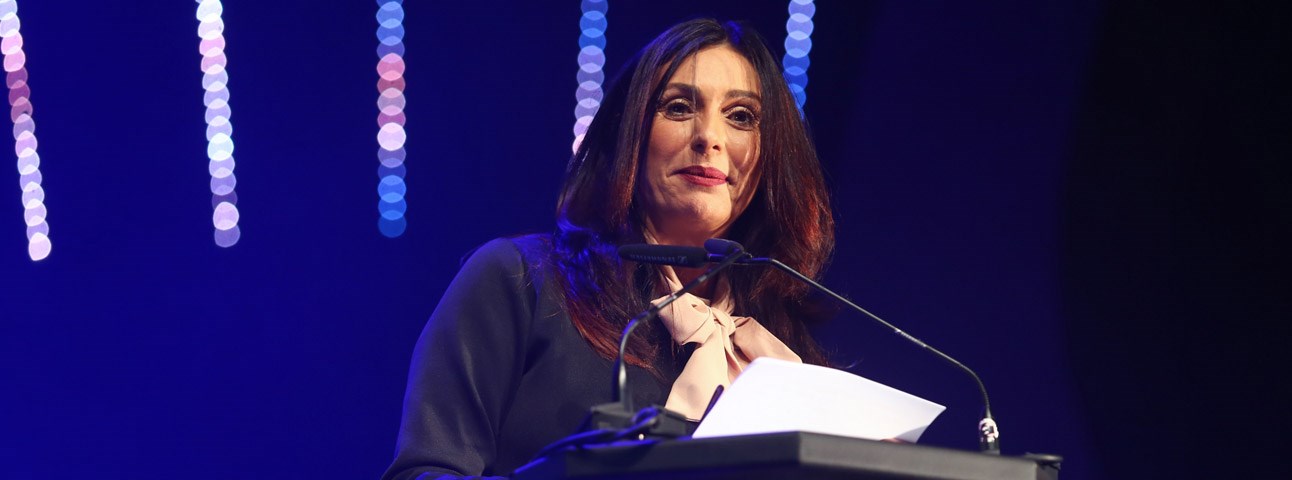
The Public Intellectual in Israel
This conference will examine the Israeli public intellectual’s place in public discourse, from a historical and contemporary perspective as well as various ways of cultivating public intellectuals.
- Open to the public
- Hebrew
Let's Talk Independence
The Status of the Declaration of Independence: Vision, Law or Constitution? Marking the transition from the Assembly of Representatives to the Knesset, February 1949
- Open to the public
- Hebrew

A Fractured Alliance: The Mutual Commitment between Israel and the Diaspora
A conference on the Jewish nation-state, specifically focused on a central current issue: the relationship between the Jewish nation-state and Diaspora Jewry.
- Open to the public
- Live
- Hebrew
Separation, Academia and Politics – Dangerous Liaisons
In light of the proposed amendment to the law on the Council for Higher Education
- Open to the public
Israeli Democracy Index 2017
The Israeli Democracy Index 2017 will be presented on December 12, 2017 to President Reuven Rivlin by Yohanan Plesner, President of the Israel Democracy Institute (IDI)
- Hebrew
- Live
- Participation by invitation only
- Participation by invitation only
- Hebrew

10 Years of Israeli Government Socio-Economic Activity in Arab Society
This conference will present a comprehensive analysis of the Israeli government's accomplishments, set backs and challenges yet to be addressed with regards to the status of Arab society in the country over the last decade.
- Participation by invitation only
- Live

Open Primaries in Israel: Opportunities and Challenges
What is the most suitable way to select candidates for the Knesset? What are the pros and cons of the various methods, from the leader's method to open primaries? What are the opportunities and risks involved in adopting an open primaries model?
- Participation by invitation only
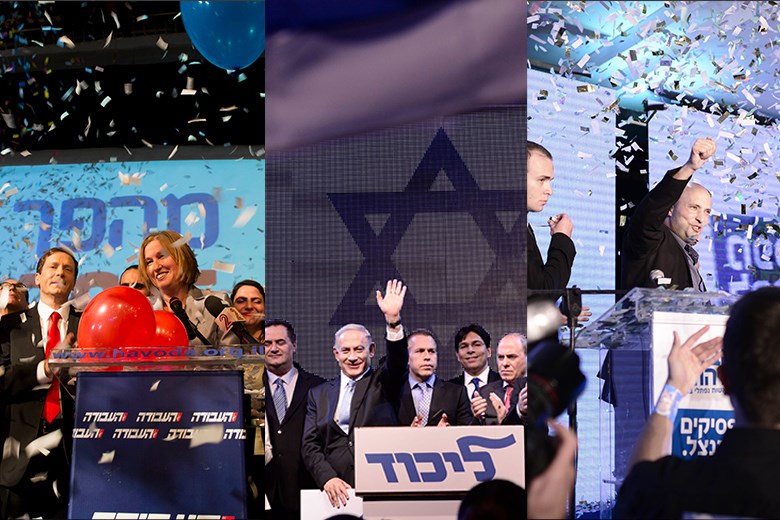
Senior Civil Service Appointments
Do political appointments in the civil service improve governance or obstruct gatekeepers' oversight abilities? This special discussion is being convened by the Israel Democracy Institute and Center for Citizen Empowerment.
- Live
- Participation by invitation only
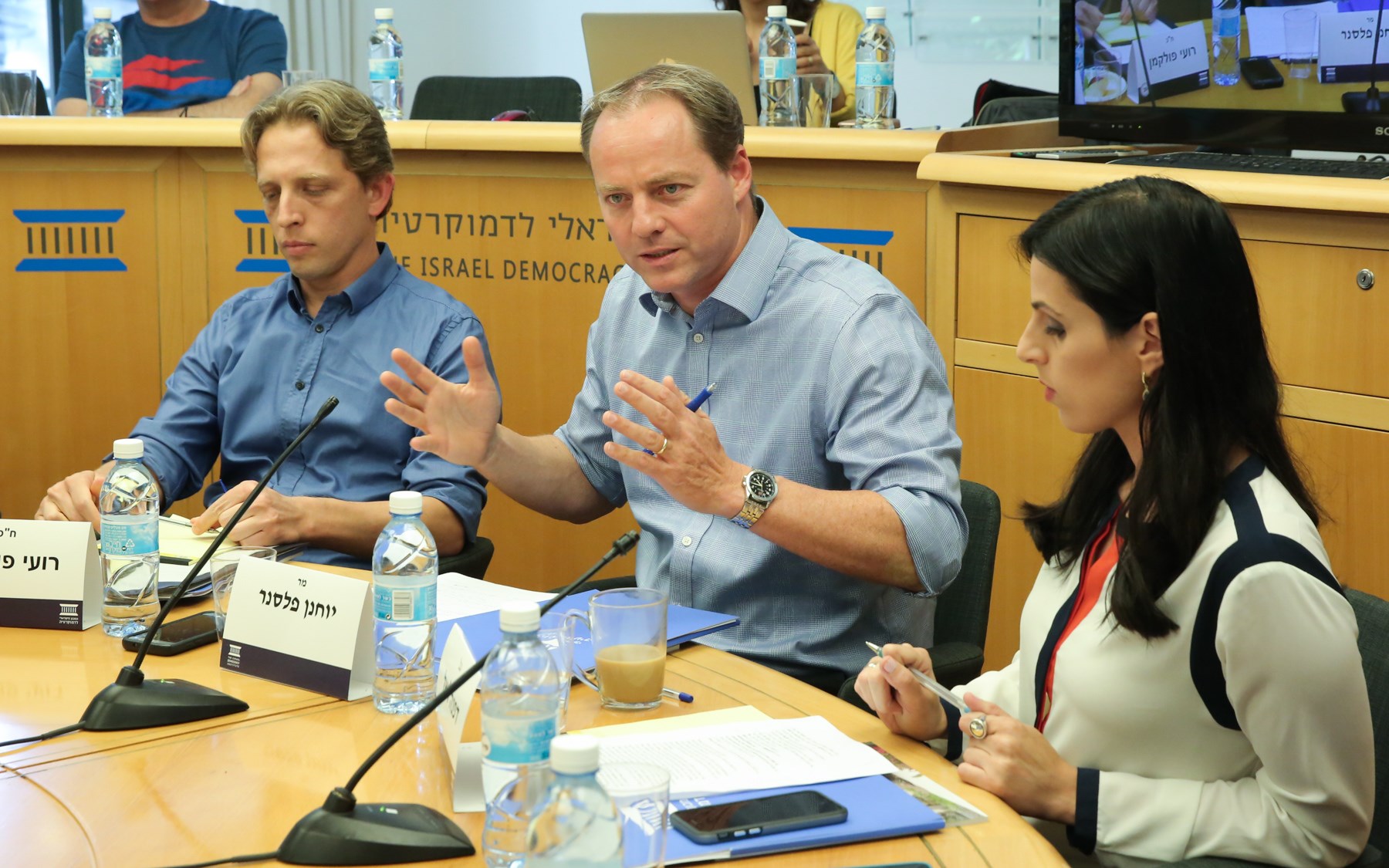
2017 Outstanding Parliamentarian Award
This year the Israel Democracy Institute (IDI) will bestow the Outstanding Parliamentarian Award MK Roy Folkman (Kulanu) and MK Karin Elharar (Yesh Atid)
- Hebrew
- Participation by invitation only
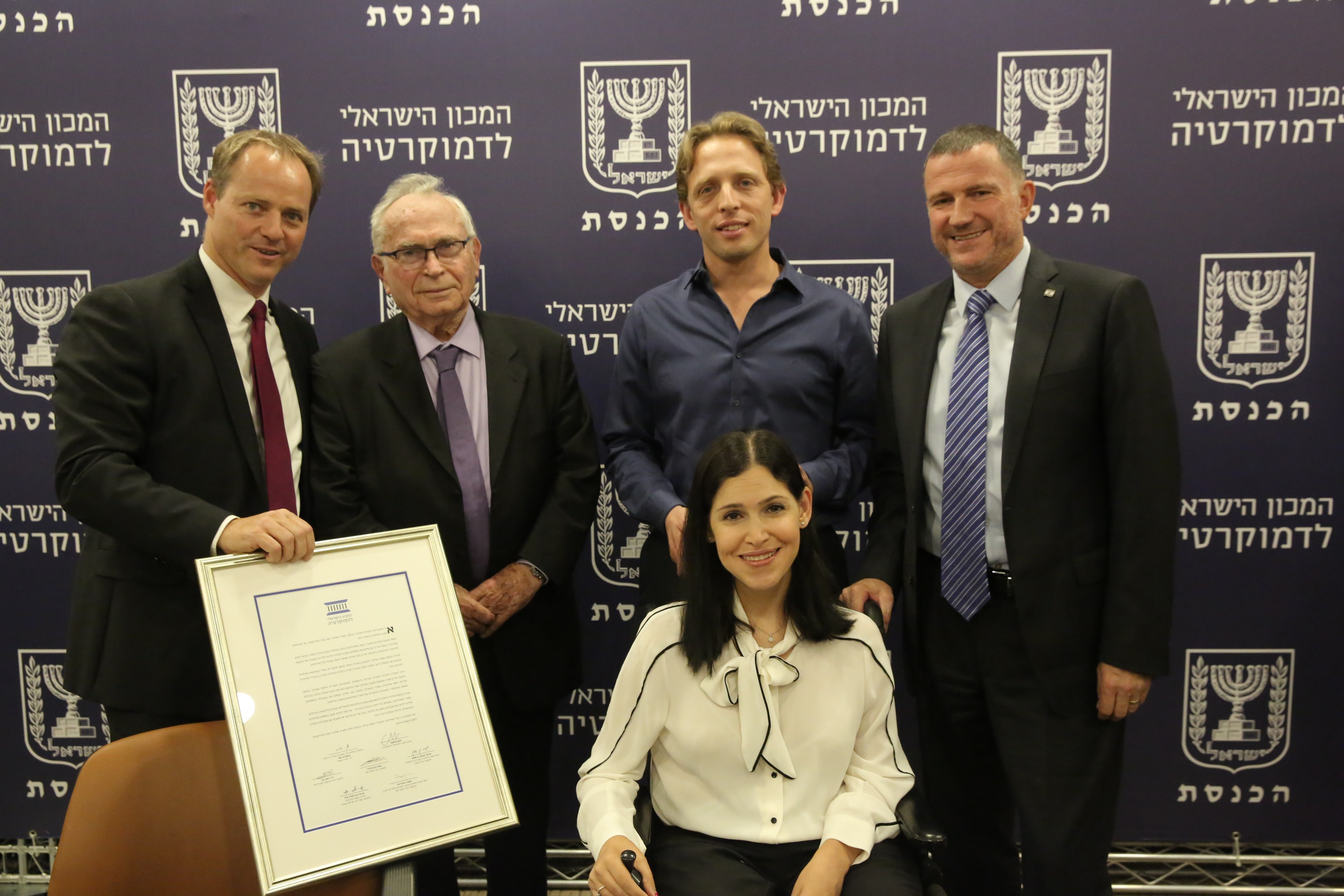
70th Anniversary of the Status Quo
Considering the Western Wall egalitarian prayer space crisis and the recent cementing of the ultra-Orthodox monopoly on conversions, the Israel Democracy Institute (IDI) will host a special conference on the erosion of the status quo, which was an attempt to shape a simultaneously Jewish and Israeli society, based on common denominators. Does the status quo still work? Is it possible to reach a consensus on legislation pertaining to issues of religion and state? How can religious services in Israel be improved?
- Open to the public
- Live
- Hebrew

Eli Hurvitz Conference on Economy and Society 2017
Work collaboratively in an intimate setting and among senior thought leaders on ways to strengthen the socioeconomic strategy of the state of Israel.
- Participation by invitation only

- Hebrew
- Live
Regulation of Communication Networks Surveillance and the Principle of Proportionality
The principle of proportionality is not always taken into consideration within the discourse relating to privacy and state sanctioned online surveillance. Different jurisdictions and legal systems use explicit or tacit proportionality considerations by deploying various procedural, institutional and technological safeguards in the context of communication networks surveillance.
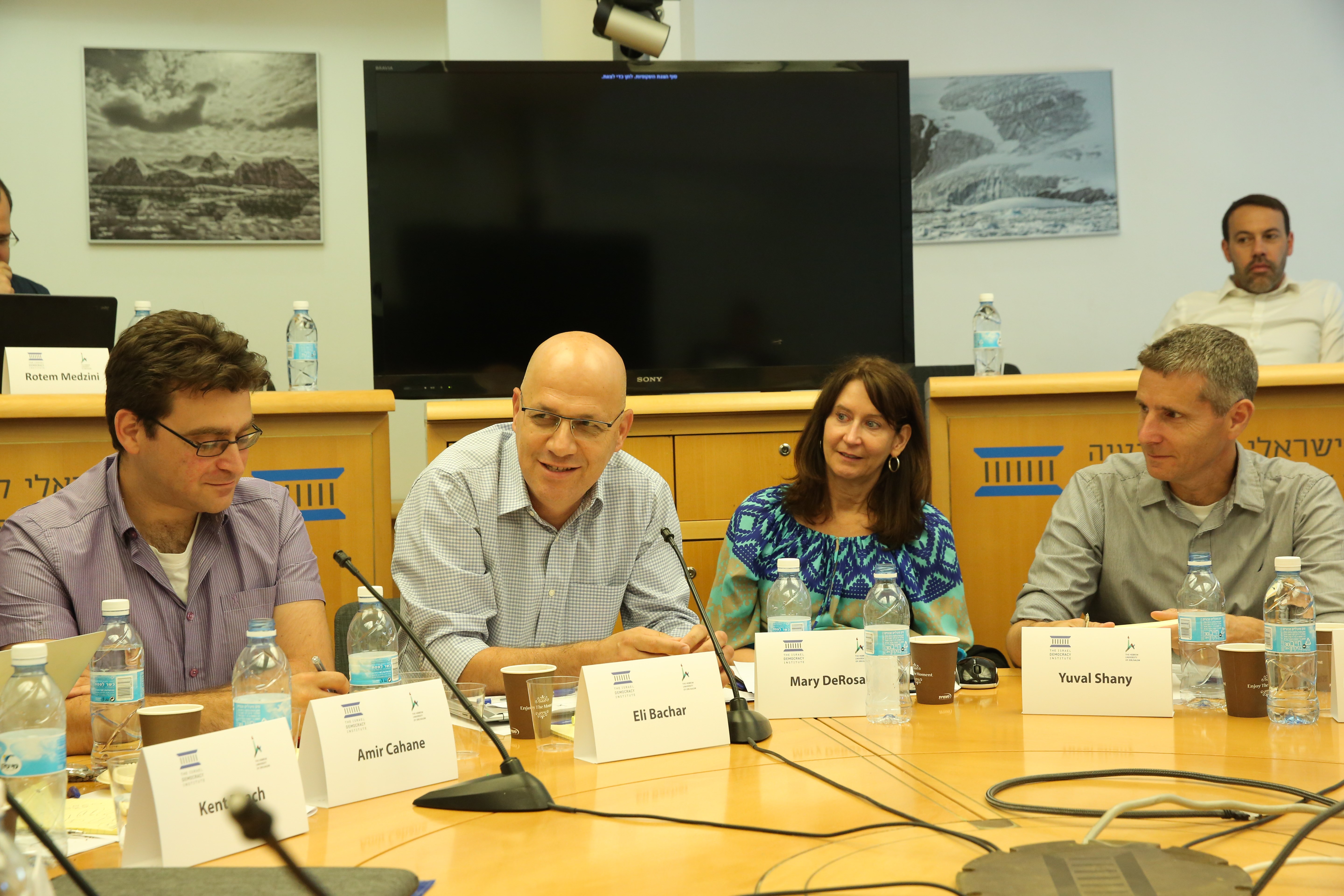
50 Year Anniversary of the Six-Day War: Possible Political Scenarios and their Implications
What are the implications of each potential political solution for the territories, Judea and Samaria? How will Israel be affected in each scenario? What are the implications for democracy, security, Arabs and the settlers?
- Participation by invitation only
- Live
- Hebrew

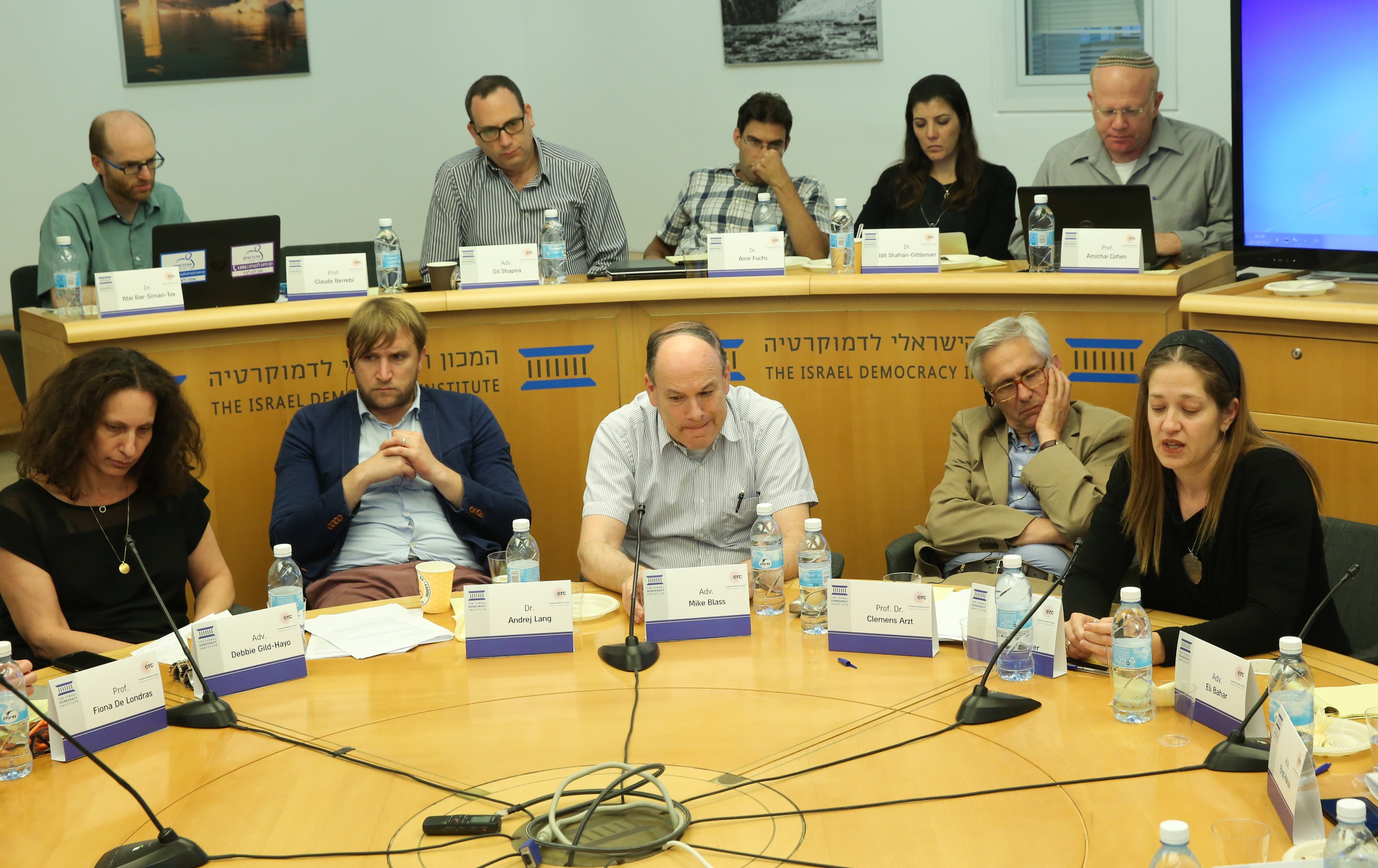
Needs Improvement! The Work of the Knesset and the Status of Israel's Elected Officials
An Israel Democracy Institute event in collaboration with the Hebrew paper Makor Rishon
- Hebrew
- Open to the public
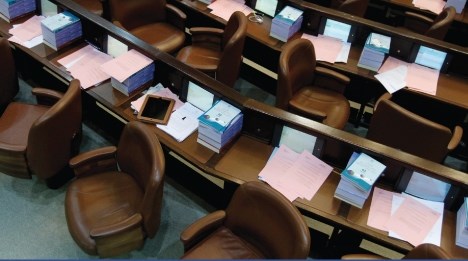
Public Time and Media Temporalities in an Age of Acceleration: A Research Workshop of the Israel Science Foundation
IDI hosts a timely workshop that examines the connection between advances in digital technology, development and dissemination of media content, good government and the future viability of Israel's democracy.
- Participation by invitation only

Arab Political Leadership in Israel: An Israel Democracy Institute Nation-State Seminar
What is the relationship between Israel’s Arab minority and the state? What is their position as individuals and as a national group? Arab political leadership has an effect on the answers to these questions. This Israel Democracy Institute Nation-State Program, together with the Injaz Center for Professional Arab Local Governance, invites you to a roundtable discussion to analyze these issues. Discussion will center on the role of Arab leaders in Israel, their complicated relationship with their Arab constituency and the state.
- Hebrew
- Open to the public
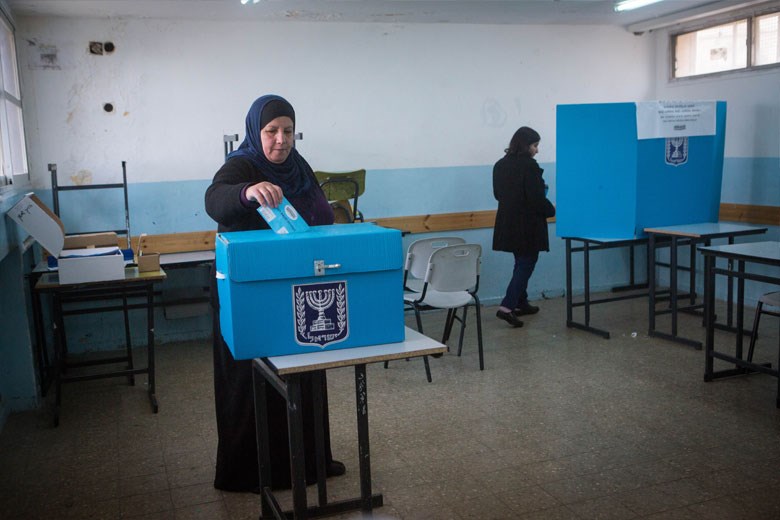
Roundtable: Freedom of Expression and Facebook
No one disagrees that social networks are a central and important platform that tremendously increases our freedom of expression – both in our ability to express our own views and in our access to consumer information. However, concurrently, we are uncovering some disadvantages of these platforms.
- Participation by invitation only

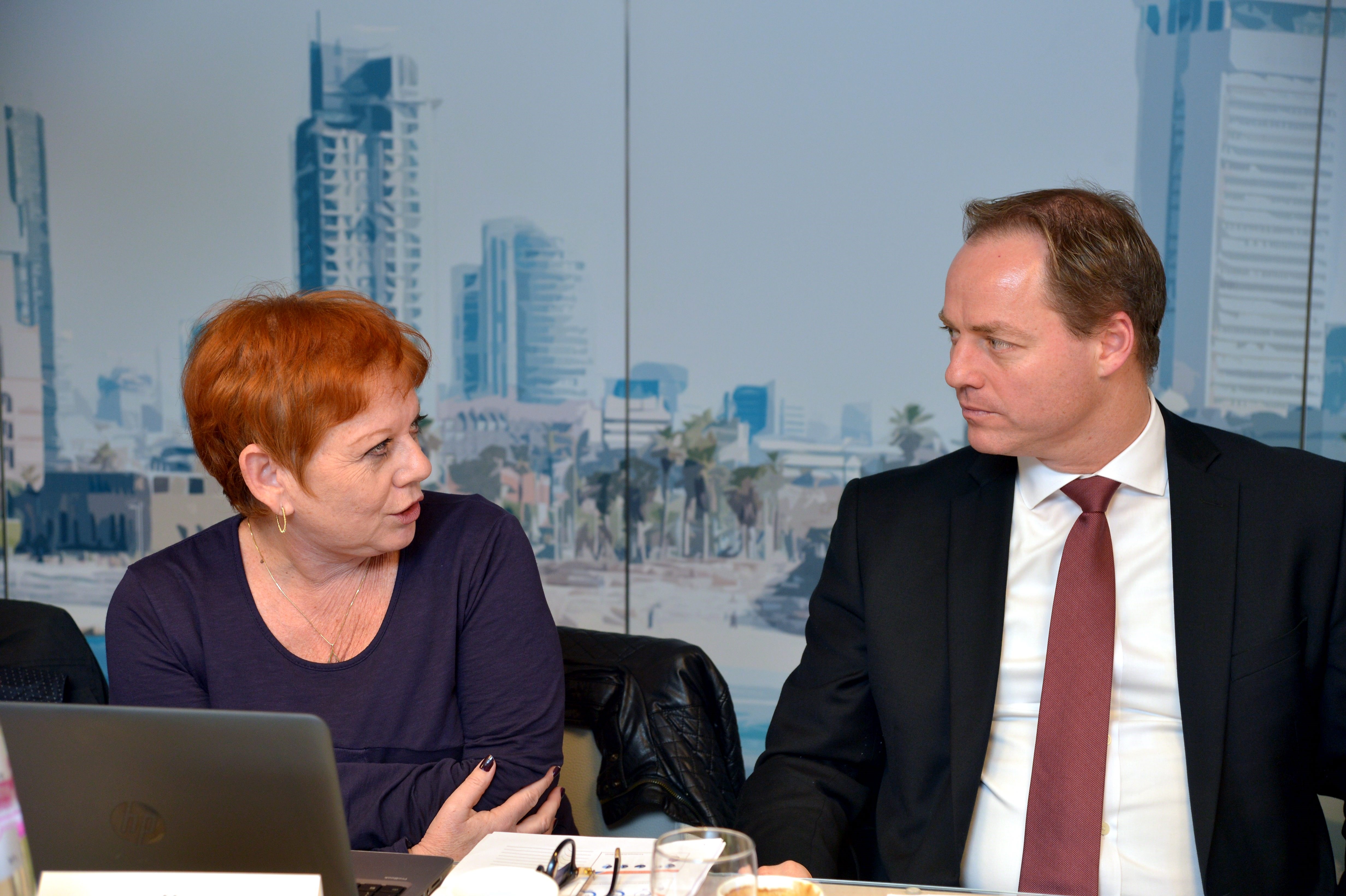
Diplomatic Briefing: 2016 Israeli Democracy Index
On Friday, January 13, the Israel Democracy Institute hosted a diplomatic briefing on the 2016 Israeli Democracy Index for ambassadors, deputy ambassadors and other top visiting officials. The Democracy Index aims at assessing trends in Israeli public opinion regarding realization of democratic values and the performance of government systems and elected officials. Analysis of its results may contribute to public discussion of the status of democracy in Israel and create a cumulative empirical database to intensify discourse concerning such issues. Learn more: https://en.idi.org.il/publications/11985
- Participation by invitation only
- Participation by invitation only
- Hebrew

Gauging Democracies
International Workshop
Limits of Jewish Identity
This seminar will feature local and international experts, who will discuss various issues related to Jewish identity, such as: how one becomes a member of the Jewish people, attitudes towards mixed marriages, the proliferation of ways to be Jewish today and more.
The Israel Democracy Institute's Amnon Lipkin-Shahak Program on National Security and Democracy Presents: "Commemorating 30 Years Since the Capture of Ron Arad"
The Israel Democracy Institute and Ron Arad's colleagues from his piloting course cordially invite you to a symposium.
- Open to the public
- Hebrew

- Hebrew
- Participation by invitation only
- Live
- Hebrew
- Live
- Open to the public
Ethics in Public Discourse
Co-sponsored by Jerusalem Center for Ethics and Tzohar Academic direction by Rabbi Yuval Cherlow, head of the ethics and religion department at the Jerusalem Center for Ethics and the head of the ethics division of Tzohar Dr. Tehilla Shwartz Altshuler, head of the Media Ethics Program at the Israel Democracy Institute With participation by MK Yuli Edelstein, speaker of the Knesset
- Open to the public

Haredim in Academia
On Sept. 20, the Israel Democracy Institute and the Federmann School of Public Policy and Government at the Hebrew University hosted a several hours-long workshop to discuss the Council for Higher Education’s five-year plan to integrate members of the ultra-Orthodox community into academia. The event focused on the plan’s challenges and opportunities, alternatives and impact on Israeli society, academia, ultra-Orthodox society and the status of women.
- Open to the public
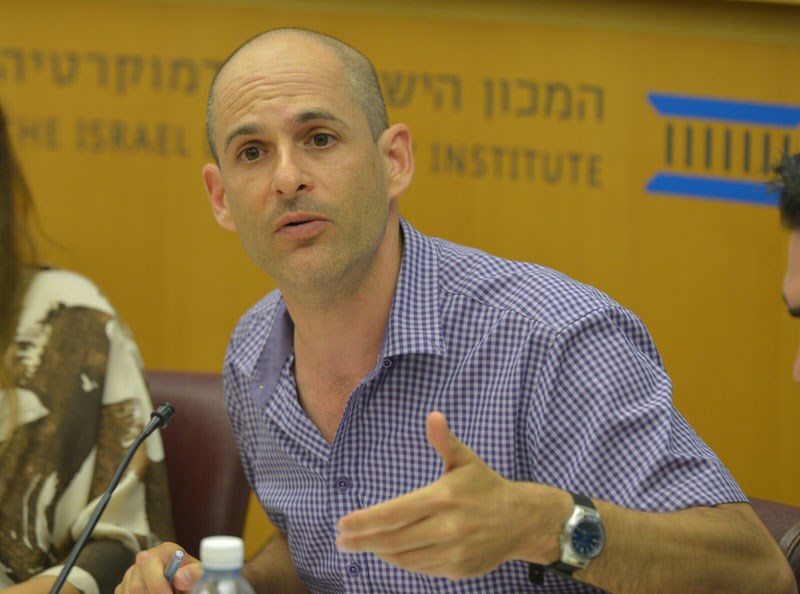
Palestinian-Israeli Pulse: A Joint Poll
Press Conference: A first look at the results of a new survey published by The Israel Democracy Institute (IDI) in Jerusalem and The Palestinian Center for Policy and Survey Research (PSR) in Ramallah, in partnership with and support from the Konrad-Adenauer-Stiftung (KAS) and with funding from the European Union (EU). Open to press only.

Open Primaries in Israel: Possible?
The United States is currently electing the candidates for president through an open primaries process. Could something similar work in Israel? Would open primaries help stabilize the Israeli political process?
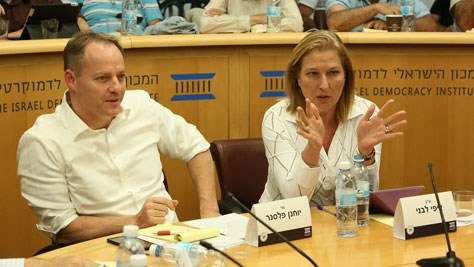
Toward a More Inclusive Foreign Policy
How to increase the participation of Israel's diverse population groups in discussions related to the country's foreign policy? By invitation only.
- Participation by invitation only
Meeting of the Caucus for Strengthening the Knesset
A second meeting of the caucus for strengthening the stature of the Knesset led by MK Elazar Stern (Yesh Atid). Discussion focused on private-member legislation, which is brought before the Knesset at a higher rate than among most Western countries.
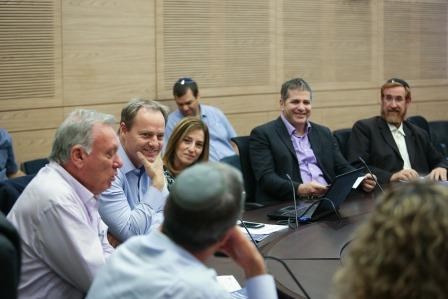
Council for Higher Education: Where to Now?
The public is invited to participate in the 33rd meeting of the forum to discuss issues facing the higher education system in Israel in a symposium entitled "The Council of Higher Education: Where to Now?"
- Open to the public
Outstanding Parliamentarian Award
The Outstanding Parliamentarian Award will be granted to MKs Moshe .Gafni and Ayelet Nahmias-Verbin
- Participation by invitation only
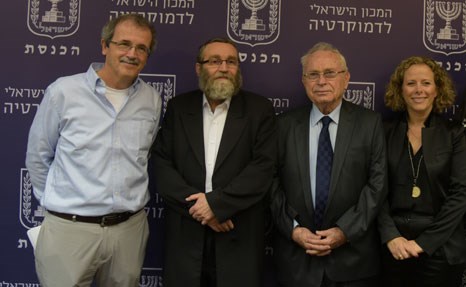
French-German Tel Aviv Night of Philosophy
Throughout the night, the public will be able to attend discussions, lectures, readings, panels, concerts and performances. The audience will experience philosophy in a whole new light – by night!
- Open to the public

- Participation by invitation only
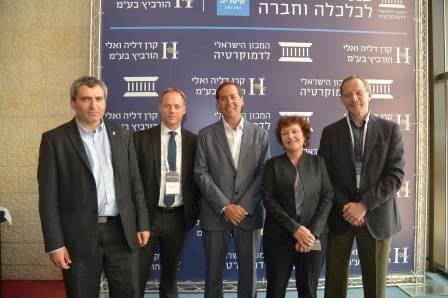
Legal Guidelines for Searching Online Computer Content
The growing use of computers in all areas of life is rapidly changing the legal landscape. The frequency of computer is causing regulatory agencies to request that their authority to search online content (including mobile devices) be expanded. This IDI discussion was by invitation only.

IDI Roundtable on the Topic of How to Appoint Senior-Level Civil Service Professionals
Should there be political appointments? How do these appointments impact the effectiveness of the government?
- Participation by invitation only
In the Aftermath of the Court Ruling on the Holyland Affair
How should the Israeli courts handle cases involving the corruption of senior leaders? And what was it in the Holyland Affair that led to criticism of the judicial system and its verdict?

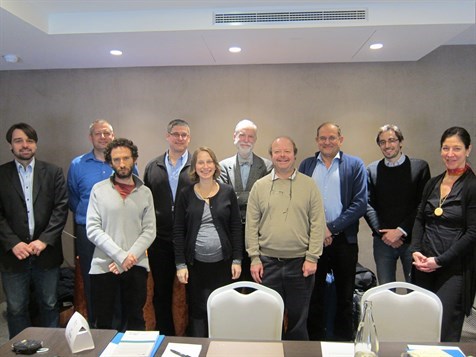
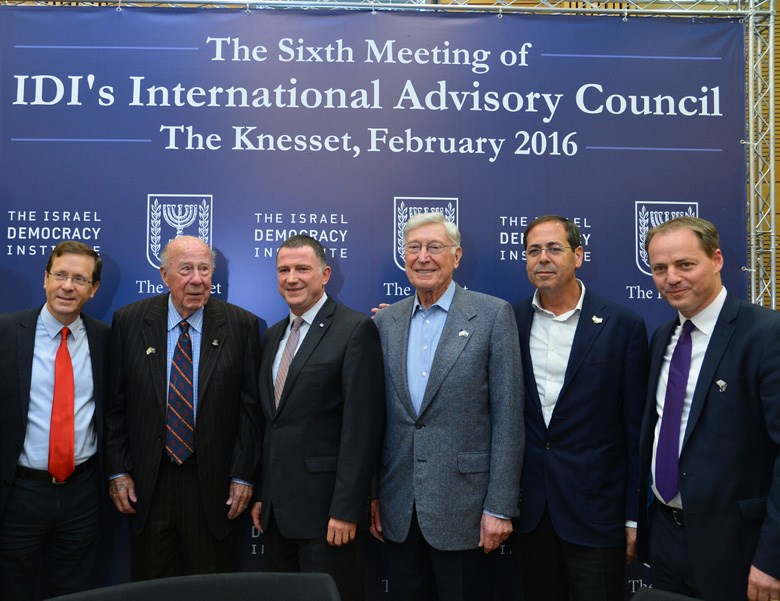
The Sixth Meeting of IDI's International Advisory Council
From February 12-15, 2016, members of IDI's International Advisory Council, Board of Directors, and distinguished guests gathered in Jerusalem.
- Participation by invitation only
From Entering the Workforce to Making the Workforce Easier to Enter: The Israel Democracy Institute's Master Plan for Ultra-Orthodox Employment
Celebration of the launch of the Israel Democracy Institute's master plan for Ultra-Orthodox employment. This event (Hebrew) was live streamed.
- Open to the public

When Judaism Meets State
A roundtable discussion celebrating the publication of the book "When Judaism Meets State" (IDI Press 2015).
- Open to the public

The Haredi Woman in the 21st Century: Family, Community and Society
A conference organized by Dr. Lee Cahaner and Mrs. Racheli Ibenboim
- Live
- Open to the public

Can We Come to a Solution on the Atir-Umm al-Hiran Case?
A joint discussion presented by the Israel Democracy Institute and the Abraham Fund.
- Live
The Amnon Lipkin Shahak Program on National Security & Democracy
The annual synposium of the Amnon Lipkin Shahak Program on National Security & Democracy
Presentation of the 2015 Israeli Democracy Index
Presentation of the 2015 Israeli Democracy Index to President Reuven Rivlin and release of its findings to the public
- Participation by invitation only
Both Jewish and Democratic – Is it Possible?
The book launch for "Both Jewish and Democratic: A Handbook for Israeli Teachers" by Prof. Adar Cohen.
- Live
- Open to the public
The Impact of the Rabin Assassination on Religious Zionism
After 20 years, the assassination of Prime Minister Yitzhak Rabin is still seen as a pivotal event in the relationship between religious Zionism and Israeli society. This seminar will examine how religious Zionism has changed over the past two decades and what (if any) impact Rabin's murder had on those changes.
- Open to the public
Symposium on the Rabin Assassination and Israeli Democracy: A 20-Year Perspective
Co-sponsored by Ynet
- Live
- Hebrew
- Open to the public
Roundtable on the Role and Functioning of Israel's Commission for Prosecutorial Oversight
A roundtable convened by IDI and the Kohelet Policy Forum
- Live
- Open to the public
- Hebrew
The Outstanding Parliamentarian Award 2014
Ceremony in the Presence of Knesset Speaker Yoel (Yuli) Edelstein
The Disengagement from Gaza Revisited
A joint conference convened by IDI and Makor Rishon, which explored how Israeli democracy continues to face the challenges of the Disengagement.
- Live
- Open to the public
- Hebrew
International Workshop: Rights in the Policy Process
An international workshop in Madrid, as a part of the "Proportionality in Public Policy" project, funded by a research grant from the European Research Council.
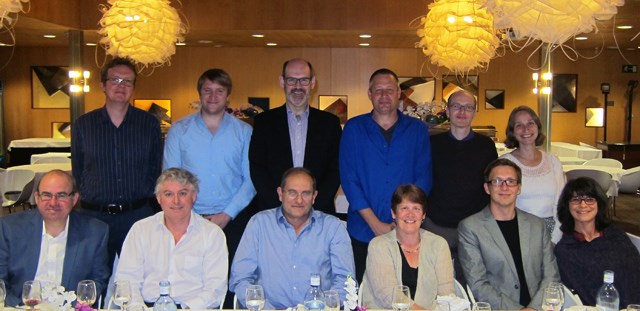
The Dov Lautman Conference on Educational Policy
A joint conference convened by the Lautman Foundation, IDI, and the Open University, during which President Ruby Rivlin awarded letters of recognition schools throughout Israel that have stood out in the pursuit of cooperation and dialogue between different segments of Israeli society, and against violence and racism.
- Live
- Hebrew
Conversion to Judaism: Why Doesn't Anyone Care?
A meeting at the Knesset, convened by MK Dr. Aliza Lavie in cooperation with IDI and ITIM, to discuss the conversion of children and youth to Judaism in Israel.
From Charity to Rights: On the Status of People with Disabilities
A conference on the status of people with disabilities in Israel hosted by IDI and the Ruderman Family Foundation
- Live
- Open to the public
- Hebrew
The Political System of Israel: Is Israel (Still) a Democracy?
A celebratory event in honor of "The Political System of Israel," by Prof. Yitzhak Galnoor and Dr. Dana Blander.
- Open to the public
How Will the 20th Knesset Treat Israeli Democracy?
A Pre-Election Book Launch
- Open to the public
- Live
- Hebrew
Is the Right Still Liberal? A Panel Discussion at the Haaretz Israel Democracy Conference
A panel hosted by IDI and the Menachem Begin Heritage Center
Symposium: The National Religious Sector in Israel 2014
An evening dedicated to the findings of a study of the National Religious Sector conducted by IDI's Guttman Center for Surveys
- Live
- Open to the public
- Hebrew
Symposium on Treating Prison Inmates with Medical Conditions
A symposium on caring for prison inmates who are HIV positive or who refuse to accept medical treatment, conducted by IDI and the Inmate Division of the Israel Prison Service.
Presentation of the 2014 Israeli Democracy Index
Presentation of the 2014 Israeli Democracy Index to President Reuven Rivlin and release of its findings to the public
- Participation by invitation only
Roundtable on Asymmetric Warfare: Lessons from Operation Protective Edge
A roundtable hosted by IDI's Amnon Lipkin-Shahak Center for Security and Democracy and the Konrad Adenauer Stiftung
- Live
- Hebrew
- Participation by invitation only
The Challenges for Democracies Facing Asymmetric Conflicts
An event held as part of the Rand Corporation's Policy Circle Briefing Series
Conference on Religions, Rights, and Institutions
A joint event of IDI's Human Rights and Judaism project and Princeton University’s Law and Public Affairs Program
The Eli Hurvitz Conference on Economy and Society 2014
The Caesarea Forum Since 1992
- Hebrew
- Live
The Fighting Ethos of the IDF: Has it Changed?
An exploration of whether changes in Israeli society changing the nature of Israeli soldiers and the values that motivate them, convened in the wake of Operation Protective Edge.
- Open to the public
- Live
Emergency Meeting: How Can We Prevent the Deterioration of Jewish-Arab Relations in Israel?
An urgent meeting to prevent further deterioration of relations between Jews and Arabs in Israel following the murder of Eyal Yifrach, Naftali Fraenkel, Gilad Shaar, and Mohammed Abu Khdeir and Operation Protective Edge.
- Open to the public
Conference on Jewish Attitudes toward the Other
How do Jewish sources—both religious and national—relate to citizens who are not Jewish, whether as individuals or members of a group? This question was explored at a unique conference at the Israel Democracy Institute that examined and evaluated the way Jewish thinkers saw this issue throughout the generations.
- Live
- Hebrew
Roundtable: How Much Autonomy Should There Be in Israeli Higher Education?
A roundtable that explored the challenge of maintaining the autonomy of Israel's system of higher education while ensuring its contribution to the State and to Israeli society.
- Live
- Open to the public
Is 'Basic Law: Israel as the Nation State of the Jewish People’ Necessary?
A Conference with the Hemdat Hadarom College of Education
- Open to the public
And You Shall Teach Your Child: Integrating Children with Intellectual Disabilities in the Passover Seder
An evening of study dedicated to the integration of people with intellectual disabilities in the family, the community, and Jewish life.
- Open to the public
Symposium in Honor of the Publication of Imagined Democracies by Yaron Ezrahi
A book launch in honor of the publication of Prof. Yaron Ezrahi's new book by Cambridge University Press.
- Hebrew
- Open to the public
Conference: Is There a Need for a Basic Law Defining Israel as a Jewish and Democratic State?
The Knesset is currently debating two initiatives that would give the Jewish and democratic identity of the State of Israel a constitutional foundation. On March 5, 2014, the Israel Democracy Institute and the Hebrew University Faculty of Law convened a conference in order to discuss the issues that surround these initiatives.
The Outstanding Parliamentarian Award 2013
Ceremony in the Presence of Knesset Speaker Yoel (Yuli) Edelstein
The Second Agunah Summit: State Solutions vs. Non-State Solutions
A joint initiative of IDI, the Bar-Ilan University Faculty of Law, the Tikvah Center for Law & Jewish Civilization, and JOFA
- Hebrew
I Am My Brother's Keeper: A Conference on People with Disabilities
A conference on responsibility for people with disabilities in cooperation with Bizchut – The Israel Human Rights Center for People with Disabilities
- Hebrew
Book Launch: The Political System of Israel
An evening to mark the publication of the first volume of a comprehensive overview of Israel's political system by Prof. Yitzhak Galnoor and Dr. Dana Blander
- Hebrew
Seminar for the Young Leadership of the Israel Scouts
A briefing on contemporary issues on the public agenda
- Hebrew

Roundtable on Spiritual Leadership at a Crossroads
How is the Lithuanian ultra-Orthodox community dealing with the split within its community? How is religious Zionism dealing with the tension between its liberal and more ultra-Orthodox streams? What will happen to the Sephardic ultra-Orthodox community in the post-Ovadia Yosef period? Are we indeed at the end of an era?
- Live
- Open to the public
- Hebrew
Israel Speaks: Human Dignity | Assembly of 200
A meeting of the Assembly of 200 of IDI's Israel Speaks: Human Dignity initiative, which brought together 200 citizens from all walks of Israeli life to partner in a historic, nation-wide effort to draft a Declaration of Human Dignity
- Participation by invitation only

News You Can't Use: Embargoes and Exclusives
A roundtable on embargoes and exclusives
- Live
- Hebrew
- Open to the public
Prime Minister Benjamin Netanyahu's Address at the 2013 Eli Hurvitz Conference Caesarea Forum
On November 6, 2013, Prime Minister Benjamin Netanyahu presented his economic vision to the participants in the Eli Hurvitz Conference on Economy and Society via video. As can be seen below, his five-point plan emphasized developing technology, building infrastructure, cultivating new markets, exercising responsibility, and encouraging competition.
Interview with Dr. Karnit Flug at the 2013 Eli Hurvitz Conference on Economy and Society
On November 6, 2013, a video interview with Bank of Israel Governor Designate Dr. Karnit Flug was broadcast at the 2013 Eli Hurvitz Conference on Economy and Society. This was Dr. Flug's first public interview since being named Governor of the Bank of Israel. Dr. Flug was interviewed by Mr. Yarom Ariav, the director of the Eli Hurvitz Conference, two days before the conference itself. Dr. Flug, who has attended the conference for many years, was not able to attend the conference due to overseas commitments.
Address of Health Minister Yael German to the 2013 Eli Hurvitz Conference on Economy and Society
As the start of her address to the 2013 Eli Hurvitz Conference on Economy and Society, Health Minister Yael German asserted the point of departure of her presentation is the lack of investment in health: we talk about health, we even die for health, but we are less likely to invest in it.
Presentation of the 2013 Israeli Democracy Index
On Sunday October 6, 2013, the 2013 Israeli Democracy Index was presented to President Shimon Peres and the findings were released to the general public.
- Participation by invitation only
The 2012 Outstanding Parliamentarian Award
The second annual Outstanding Parliamentarian Award
- Hebrew
- Participation by invitation only
Avoda Aravit (Arab Labor): Comedy, Conflict, and Controversy
A public event hosted by Keshet Broadcasting and the Israel Democracy Institute
- Live
- Open to the public
- Hebrew

Israel Speaks: Human Dignity | Council of 20
The kick off event of IDI's Israel Speaks: Human Dignity project, in which 20 leading representatives of Israeli society shared perspectives on human dignity and defined the conceptual framework for a Declaration of Human Dignity.
- Participation by invitation only
Symposium on the Index of Arab-Jewish Relations in Israel 2012
This event is In cooperation with the University of Haifa and the Jewish-Arab Center
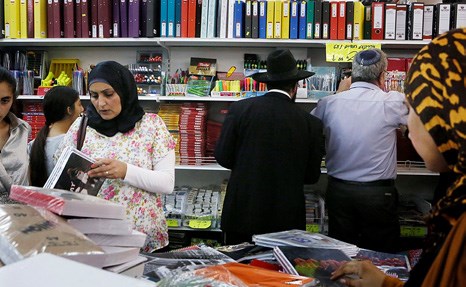
Pursuing Justice: Society and Economy in Jewish Sources
A conference that explored whether it is possible to engage traditional Jewish sources in the contemporary debate on the nature of distributive justice and to involve them as active participants in shaping Israeli society today.
- Live
- Participation by invitation only
- Hebrew
Conference on the Future of Religious Zionism: Integration, Separation, or Leadership?
A two-day conference on the role of Religious Zionism in Israeli society
- Live
- Open to the public
- Hebrew
Women in the Israel Defense Forces: Forward March or About Face?
A roundtable in cooperation with the Institute for National Security Studies (INSS) and Reshet Bet
- Live
- Participation by invitation only
- Hebrew
The Status of Deaf People in Rabbinic Courts: Session 4
The last lecture in a series of four lectures by Rabbi Dr. Benjamin (Benny) Lau
- Open to the public
- Hebrew
Conference on Economics and Local Elections in Israel
A conference in cooperation with the Konrad Adenauer Stiftung
- Participation by invitation only
- Hebrew
Women in the IDF: Forward March or About Face?
In cooperation with the Institute for National Security Studies (INSS) and Reshet Bet radio.

Nation and Citizenship Forum
Four days of debates, panels, and exchanges in French and Hebrew with simultaneous translation
- Hebrew
The Status of Deaf People in Rabbinic Courts: Session 3
The third lecture in a series of four lectures by Rabbi Dr. Benjamin (Benny) Lau
- Open to the public
The Status of Deaf People in Rabbinic Courts: Session 2
The second in a series of four lectures by Rabbi Dr. Benjamin (Benny) Lau at the Ramban Synagogue
- Open to the public
The Status of Deaf People in Rabbinic Courts: Session 1
The first in a series of four lectures by Rabbi Dr. Benjamin (Benny) Lau at the Ramban Synagogue
- Open to the public
- Open to the public
- Hebrew
On this Night We All Recline: Accessibility and Inclusion of People with Disabilities in the Family and Community
A special pre-Passover event at the Ramban Synagogue
- Open to the public
- Hebrew
International Conference on Immigration and the Future of the Nation State
Co-sponsored by Metzilah - The Center for Zionist, Jewish, Liberal and Humanist Thought
- Open to the public
- Live
The State Budget: Has the Era of "Special Funding" Come to an End?
A Roundtable on Section 3A of the Foundations of the Budget Law 1985
- Live
- Open to the public
Seminar on Arab Politics in Israel following the 19th Knesset Elections
Co-sponsored by IDI and the Konrad Adenauer Stiftung in Israel
- Open to the public
- Live
The Fourth Meeting of IDI's International Advisory Council
The fourth meeting of IDI's International Advisory Council took place on February 2–4, 2013 in Wye River, MD.
Book Launch: Building Democracy on Sand
An event marking the publication of Dr. Arye Carmon's new book on the constitutional quest in Israel by IDI and Am Oved.
- Open to the public
Symposium on Academic Freedom, Research Freedom, and Freedom of Speech
An event hosted by IDI and the Van Leer Institute that will explore the erosion of the border between academic freedom and politics.
- Hebrew
- Open to the public
IDI Presents Proposal for Regulating Lobbyist Activity to Knesset
On Thursday, January 3, 2013, IDI Vice President Prof. Mordechai Kremnitzer presented a proposal to regulate lobbying activity in Israel to Knesset Speaker Reuven Rivlin.
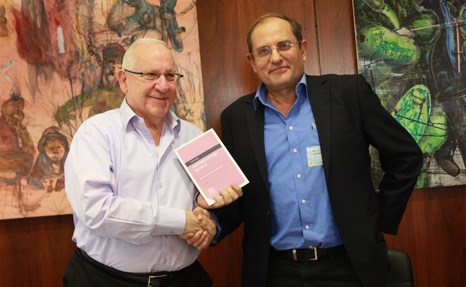
Do Religious Parties Have a Future?
A roundtable on whether there is a need for religious parties in Israel today.
- Live
- Open to the public
"And You Shall Love the Stranger": Roundtable on Immigration Policy and its Implications
An exploration of the need for immigration policies beyond the Law of Return, the economic and social impact of migrants on Israeli citizens, and policies regarding asylum seekers and refugees.
- Live
- Open to the public
International Conference on the Use of Secret Evidence in Judicial Proceedings: Democratic Principles and Practical Experiences
A two-day conference hosted by IDI's Terrorism and Democracy project
- Participation by invitation only
Roundtable on Arab Israeli Voter Turnout
A roundtable hosted by the Israel Democracy Institute and the Abraham Fund Initiatives.
- Live
- Open to the public
Israel's Democracy in the Headlines: Perceptions and Realities – A General Assembly Session
A session at the General Assembly in Baltimore featuring IDI President Dr. Arye Carmon.
Roundtable: The Council of Higher Education: Legitimate Regulation or Infringement of Academic Freedom?
A roundtable hosted by IDI's George Shultz Roundtable Forum and the Israel Political Science Association.
- Live
- Open to the public
Book Launch: Political Corruption in Israel
On Wednesday, October 17, 2012, IDI and the Jerusalem Center for Ethics hosted an event that explored the connection between economics, communications, politics, and political corruption.
- Live
- Open to the public

- Open to the public
- Open to the public
Facts and Conclusions in Contemporary Journalism
On Sunday June 10, 2012, IDI, in cooperation with Dr. Zvi Reich of the Communications Department of Ben-Gurion University, brought together journalists and experts from other disciplines and professions for a conference on "Facts and Conclusions in Contemporary Journalism." This interdisciplinary conference fostered extensive and in-depth discussion beyond the limitations of conventional journalistic debate, and exposed journalists to best practices from other disciplines that can inform their journalistic work.
Roundtable: The State Audit Reconsidered: The Comptroller after the Lindenstrauss Era
As the turbulent tenure of the State Comptroller, Justice (Emeritus) Micha Lindenstrauss, neared its conclusion, IDI's George Shultz Roundtable Forum convened to discuss the role of the State Comptroller and the desired nature of the state audit.
- Open to the public
- Open to the public
- Open to the public
Role of Religion in Human Rights Discourse
On Wednesday and Thursday, May 16-17, 2012, IDI hosted an international conference on the Role of Religion in Human Rights Discourse as part of the activities of its Human Rights and Judaism project. Topics discussed at the conference included Freedom of Religion, Freedom from Religion, Religion as a Source of Human Rights, and Religion and Human Rights on the Ground.
- Live
- Hebrew
Roundtable: Regulation of Bedouin Settlements in the Negev
A roundtable on the proposed solution to the problem of Bedouin settlements in the Negev.
- Live
Book Launch: Religion and Politics in Jewish Thought: Essays in Honor of Aviezer Ravitzky
On Monday April 23, 2012, IDI and the Zalman Shazar Center hosted an evening marking the publication of Religion and Politics in Jewish Thought: Essays in Honor of Aviezer Ravitzky, edited by Benjamin Brown, Menachem Lorberbaum, Avinoam Rosenak, and Yedidia Z. Stern.
- Open to the public
Poverty in the Jewish and Democratic State
On Wednesday, March 21, 2012, IDI hosted a conference on poverty in the Jewish and democratic state as part of the activities of its Human Rights and Judaism project. The conference explored the definition of poverty from a Jewish perspective, from a socio-economic perspective, and from a moral perspective. In addition, it explored the rights and obligations of the middle class, and the responsibility of the community, civil society, and state.
- Live
- Open to the public
Conference on the Development of the Haredi Middle Class
A full day conference convened by IDI's Nation State project and Religion and State project.
Outstanding Parliamentarian Award 2011
IDI's first Outstanding Parliamentarian Award was awarded to MKs Dov Khenin, Uri Maklev, and Zevulun Orlev.
- Live
- Open to the public
- Live
- Open to the public
Roundtable on the Basic Law: Israel – The Nation State of the Jewish People
On Sunday, November 20, 2011, IDI convened the George Shultz Roundtable Forum to explore the meanings and implications of the proposed Basic Law: Israel - The Nation State of the Jewish People.
- Live
Roundtable: International Recognition of a Palestinian State
On Wednesday, September 14, 2011, from 5:00 p.m. – 8:30 p.m., the Israel Democracy Institute convened a roundtable on International Recognition of the Palestinian State and its Effect on Political and Legal Discourse in Israel. This event focused on the challenges that such a change in status will present as well as on possible solutions, and was attended by politicians and diplomats, government officials, military personnel, lawyers and jurists, academics, and prominent political activists.
- Live
- Open to the public
International Conference: Religion and Nationality
On Sunday and Monday, June 19–20, 2011, IDI hosted an international conference that explored questions of religion and state in Israel, the Middle East, and Western culture. The conference was conducted under the auspices of IDI's Nation State project, headed by IDI Senior Fellow and Israel Prize laureate Prof. Anita Shapira.
Roundtable: The Study of Civics in Israel – Where to Now?
On Wednesday, June 15, 2011, IDI convened its George Shultz Roundtable Forum to discuss the nature and content of the civics curriculum in Israel.
- Open to the public
- Open to the public
- Open to the public
Democracy and Jewish Law Conference
On Sunday June 6, 2010, IDI hosted a conference in honor of the publication of Reflections on Jewish Democracy, an anthology edited by Dr. Benny Porat in cooperation with Prof. Aviezer Ravitzsky. This conference, which was cosponsored by the Tzohar Organization, brought together leading academicians and religious scholars to explore Jewish perspectives on the principles and institutions of democracy.
International Workshop on Bi-Nationalism
On May 26-27, 2010, The Israel Democracy Institute hosted an International Workshop on Bi-Nationalism. During this workshop, leading Israeli and International scholars explored the historical record of bi-nationalist polities, examined multi-national models, and analyzed the uniqueness of the State of Israel as a Jewish nation-state.
- Open to the public
International Workshop on Citizens, Politics and the Political Profession
On December 17-19, 2008, IDI hosted leading academics from Israel and abroad, for an international workshop on Anti-Politics: Citizens, Politics and the Political Profession.