


Publications Regarding Election Results
Articles
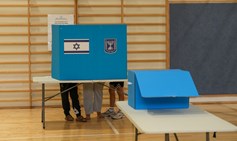
A Unity Government: A Remedy for Political Deadlock?
Written By: Yohanan Plesner , Prof. Ofer Kenig, Dr. Dana Blander
The results of Israel's 2026 elections have brought the possibility of forming a unity government back into public debate. However, cooperation between the main political rivals is neither a simple solution nor one without democratic and electoral costs.

The Economic Cost of an Inconclusive Election
Written By: Daphna Aviram-Nitzan, Roe Kenneth Portal
A constrained budget, reduced civilian spending and investment in drivers of growth, widening social disparities, and a decline in investment: An inconclusive election that leaves a caretaker government in office and prevents the passage of a state budget is likely to have far-reaching economic consequences.

The Rise in Voter Turnout in Arab Society in the Elections for the 26th Knesset
Written By: Dr. Arik Rudnitzky
The elections for the 26th Knesset were marked by extraordinary electoral mobilization among Israel’s Arab minority, reflected in a sharp rise in voter turnout. What explains this increase?

What Can the New Knesset Do in the Meantime?
Written By: Dr. Assaf Shapira
The 26th Knesset has been elected and will be sworn in on November 10, but a new government has yet to be formed, and it remains unclear whether one will be formed at all or whether Israel will head to another election. What can the Knesset do in the meantime? Can a new Knesset speaker be elected, and how? Which parliamentary committees can be established, and can the Knesset pass legislation and exercise oversight of the government during this period? And what changes if new elections are called?
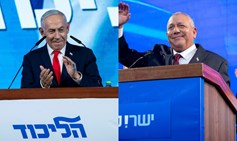
Final Results for Israel's 2026 Elections
Written By: Prof. Ofer Kenig
On October 27, Israeli citizens voted to elect the 26th Knesset. With all votes counted and the final results in, this preliminary analysis examines the distribution of seats among the parties, how many women and new members will serve in the new parliament, and how voter turnout in Israel compares internationally.

Alleged Funding of Foreign Influence in the Election: What Could This Mean for the Election Results?
Written By: Dr. Guy Lurie, Dr. Assaf Shapira
Following the directive issued by the chair of the Central Elections Committee to investigate suspicions of funding and influence by foreign actors, we explain the legal procedures that apply in such cases.

IDI’s Dr. Arik Rudnitzky on Kan English Radio: Record Arab Voter Turnout in Israel’s 2026 Election
Written By: Dr. Arik Rudnitzky
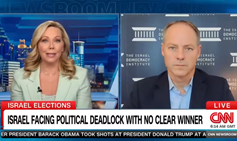
IDI President Yohanan Plesner on CNN’s Newsroom: Israel’s Preliminary Polls and Possible Scenarios
Written By: Yohanan Plesner
IDI President Yohanan Plesner joins CNN’s Newsroom to discuss the latest preliminary results from Israel’s 2026 election and the options available to both blocs for forming a government, as neither appears to have a clear path to a majority.
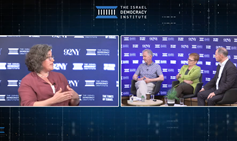
Special Post-Election Briefing with 92NY, IDI, and TOI: Understanding Israel’s Election Results
Written By: Yohanan Plesner , Prof. Tamar Hermann
Israelis have cast their ballots for the 26th Knesset, but the results remain inconclusive. In this special online briefing, experts discussed the scenarios on the table, possible paths to forming the next government, and whether Israel could be heading toward another election.
The briefing brought together IDI President Yohanan Plesner, Prof. Tamar Hermann, Director of IDI’s Viterbi Family Center for Public Opinion and Policy Research, and David Horovitz, Founding Editor of The Times of Israel, for an in-depth conversation presented by 92NY, IDI, and The Times of Israel.
The conversation was moderated by Amanda Borschel-Dan, Deputy Editor of The Times of Israel.
Minority Governments: A Possible Way Out of Political Deadlock?
Written By: Yohanan Plesner , Prof. Ofer Kenig, Dr. Assaf Shapira
Does political deadlock mean a new election? Not necessarily. Israeli law actually allows the formation of a minority government. Although rare in Israel, this type of government exists in parliamentary democracies and could help Israel avoid repeat elections – the question is whether it would be able to govern effectively.
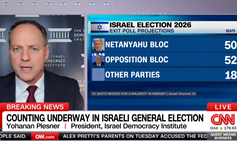
IDI President Yohanan Plesner on CNN, breaking down initial results on Israel’s 2026 election night.
Written By: Yohanan Plesner
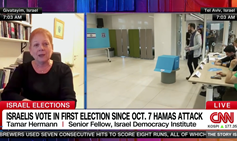
IDI’s Prof. Tamar Hermann joins CNN on the morning of Israel’s 2026 national elections.
Written By: Prof. Tamar Hermann
Today, October 27, 2026, Israelis headed to the polls to elect Israel’s 26th Knesset.
Speaking to CNN, Prof. Tamar Hermann, Academic Director of IDI’s Viterbi Family Center for Public Opinion and Policy Research, discussed the ideological differences among the parties and shifts in public opinion in the final stretch of the campaign.
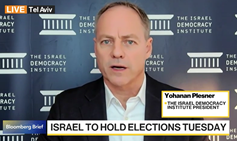
IDI President Yohanan Plesner on the Bloomberg Brief to discuss Israel's 2026 National Elections
Written By: Yohanan Plesner

IDI Goes Behind the Scenes of Election Polling with Israel’s Top Pollsters
Written By: Prof. Tamar Hermann, Dr. Lior Yohanani
In every election race, including Israel's 2026 Election, we look to polls to understand which parties are gaining or losing support and how many seats each could win in the Knesset. Yet how can polls conducted at the same time in the same country show different results? At IDI, we convened Israel’s leading pollsters to look behind the scenes of the polls we all consume. The discussion covered how different survey methods affect results, why transparency matters, and how the electoral threshold complicates projections. The discussion also highlighted an important distinction, often overlooked by the public and media: polls do not forecast Election Day results. They measure public opinion at the time they are conducted.

What Happens to Invalid Votes?
Written By: Dr. Assaf Shapira
What are invalid votes? Do they affect election results? Is there a difference between a blank ballot and other invalid votes? How many invalid votes have been recorded in each election? And how does Israel compare with other parliamentary democracies?
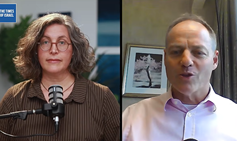
Yohanan Plesner: The Key Issues Facing Israeli Voters on TOI's What Matters Now
Written By: Yohanan Plesner
Yohanan Plesner: 3 Existential Issues Facing Israeli Voters on TOI's What Matters Now
Yohanan Plesner, President of the Israel Democracy Institute, joins host Amanda Borschel-Dan on the Times of Israel weekly podcast, What Matters Now. Ahead of Israel’s October 27 elections, they discuss the three key issues driving Israeli voters to the polls, the crowded field of parties and joint electoral lists, and the challenges of forming a stable governing coalition.
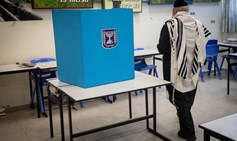
What Motivates Haredi Voters?
Written By: Avraham Lafair, Dr. Gilad Malach
Haredi society features an unusually strong link between communal affiliation and voting patterns. Over the years, various mechanisms and motivations have been created to ensure that Haredi voters turn out to vote and to dictate which party they vote for. Will the conscription crisis and the events of recent years weaken these systems?

Play
Prof. Amichai Cohen IDI's Vice President of Research on the 2026 Israeli Elections
Written By: Prof. Amichai Cohen
As Israel’s 2026 election campaign unfolds, IDI experts are examining the major questions shaping the campaign—and the country’s future. In the latest video in our special election series, Prof. Amichai Cohen, IDI’s newly appointed Vice President of Research, shares three key issues he’s watching.


Israel Heads to Elections: Yohanan Plesner and Prof. Tamar Hermann with the Middle East Institute
Written By: Yohanan Plesner , Prof. Tamar Hermann
IDI President Yohanan Plesner and Prof. Tamar Hermann, Academic Director of IDI's Viterbi Family Center for Public Opinion and Policy Research, join Dr. Natan Sachs from the Middle East Institute to discuss Israel’s upcoming elections, why they are viewed as especially consequential, the role of Arab parties in future coalitions, and what might change under a different government.

Together (Beyachad): The Bennett-Lapid Merger and History of the Two Parties
Written By: Prof. Ofer Kenig

Explainer: Running on joint lists in elections: who does it benefit?
Written By: Dr. Assaf Shapira, Prof. Gideon Rahat
Former Prime Ministers Naftali Bennett and Yair Lapid announced a joint run of the "Bennett 2026" and Yesh Atid parties in the 2026 election. It is certainly possible that we will see additional joint runs like these ahead of the elections, for example, within the center bloc, the right-wing bloc, and among the Arab parties. The assumption is that such a run would benefit the parties and the bloc. But is this assumption correct?

Israel’s First Elections in the Age of AI Will Test the Integrity of Democracy
Written By: Dr. Tehilla Shwartz Altshuler
With unprecedented technological tools in the hands of foreign and domestic actors, the proliferation of chatbots in the information ecosystem, and outdated regulatory frameworks, the integrity of Israel's 2026 elections will be tested like never before.

2022 Election Results
Written By: Prof. Ofer Kenig
The 2022 elections resulted in a clear victory for former Prime Minister Netanyahu, even though voters were split on whether they wanted him back in office. Prof. Kenig explains.

The 2022 Elections: Results Analysis
Written By: Prof. Ofer Kenig
After five elections in less than four years – Israel is on its way to political stability. Although the number of voters since 2021 didn’t change dramatically – almost 9% of the votes were wasted below the electoral threshold – how does this affect the makeup of the new Knesset? In addition the 2022 elections resulted in a clear victory for former Prime Minister Netanyahu, even though voters were split on whether they wanted him back in office. Prof. Kenig explains.

5 days to the Election: Jewish Israelis are Paying Less Attention
Written By: Prof. Tamar Hermann, Dr. Or Anabi
5 days to the Elections: Jewish Israelis are Paying Less Attention. A Majority of Arab Israelis are Following with the Same or Increased Interest. 30% of the Public Predicts a Fourth Election.

Getting Stay-at-Home Potential Voters to the Polls for Israeli Elections
Written By: Dr. Assaf Shapira, Dr. Ofer Bernstein
Rather than “packaging” voting as a political, civic and moral obligation, we should try instead to get these potential voters to think about the personal benefits to be gained by going to the polls.
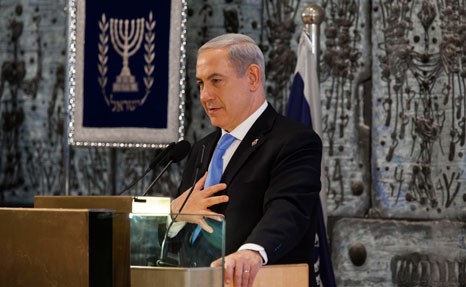
Netanyahu's Future
Written By: Dr. William Cubbison
Benjamin Netanyahu's legal problems are at the center of the current political quagmire. So what do Israelis think about the legal situation and what are the possible resolutions?

Benjamin Netanyahu Fails to Form a Government – What Happens Next?
Written By: Yohanan Plesner
While we cannot know for sure if Benny Gantz will succeed where Benjamin Netanyahu has failed, we can state with certainty that our political system of the past year has been characterized by deadlock, and this is not expected to end in the near future.
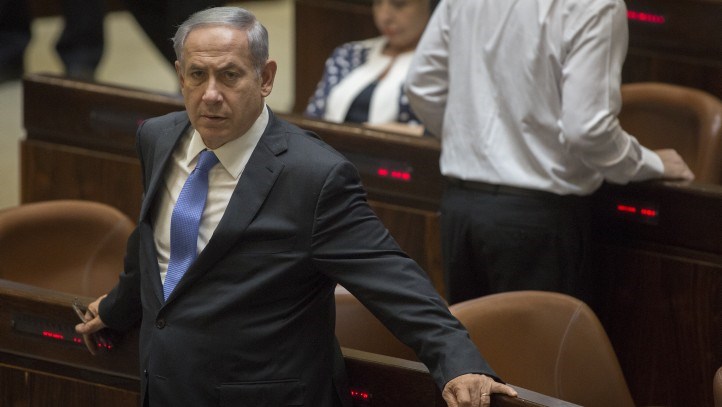
Majority of Israelis Think Netanyahu Should Resign
After Netanyahu returns mandate to the President: Most Israelis support a system based on 2 large parties and a Netanyahu-Gantz rotation for the position of prime minister. 53.5% of Israelis think Netanyahu should resign immediately, while almost half (47%) of right-wing voters believe that Netanyahu should resign if indicted.

Did the September Election Solve Anything?
Written By: Dr. William Cubbison
The failure to form a government in April and the subsequent second election surprised Israelis. Now, they might need to go to the polls for a third election in early 2020. What do Israelis think about this unprecedented political reality?

A Majority of Israelis Prefer a Unity Government
Written By: Prof. Tamar Hermann, Dr. Or Anabi
September 2019 Israeli Voice Index found that a majority of Israelis prefer a unity government. Additionally the majority of Israelis do not think the State should offer Benjamin Netanyahu a plea bargain or that he would agree to one.
In Praise of Normalcy
Written By: Prof. Yedidia Z. Stern
Despite all the fears, voter turnout was quite respectable (the third-highest rate in the seven elections this century).

September 2019 Elections - Initial Analysis
Written By: Prof. Ofer Kenig
After an unprecedented second round of elections - the final outcome is still unclear. We’re now entering the next stage of the political lifecycle: coalition negotiations - Dr. Kenig explains what’s next
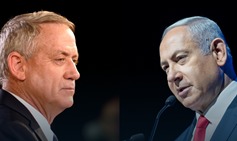
Post-Election Scenarios and the Case for Unity
Written By: Yohanan Plesner
Of the three realistic options, a unity government seems optimal. The other possibilities - a third round of voting or a narrow, right-wing government - carry exorbitant price tags.

Knesset Central Elections Committee is in Need of Reform
Written By: Dr. Dana Blander
A trustworthy and independent Central Elections Committee is essential for the holding of truly democratic elections – that is why a reform is overdue

Will Your Vote Count?
Written By: Dr. William Cubbison
To what degree does the Israeli public have faith in the integrity of the elections, to what extent does it believe that the April 9th elections will accurately reflect its views and how does Israel measure against other democracies?

Arab Politics in the 2019 Election Campaign
Written By: Dr. Arik Rudnitzky
A review of political and ideological streams in Arab society in Israel - towards 2019 elections.
23 Knesset Seats is Not a Victory
Written By: Yehoshua Oz
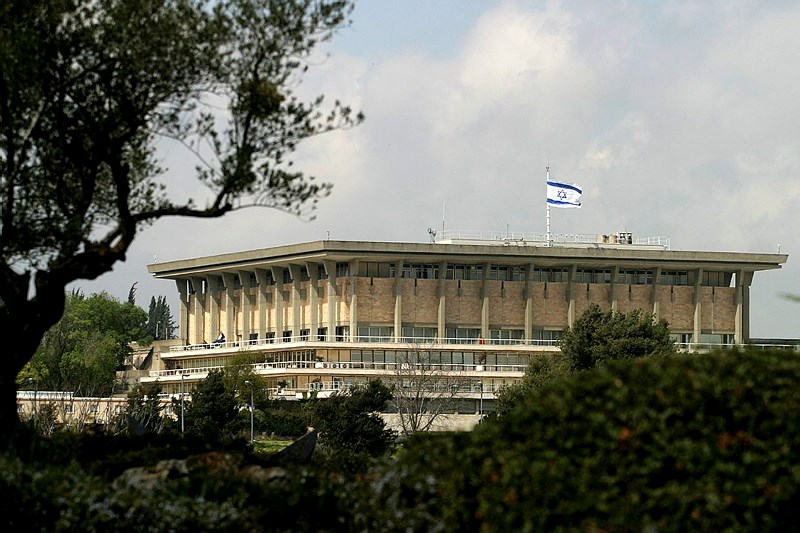
In an op-ed in the Jerusalem Post, Yehoshua Oz, IDI's Director of International Communications, argues that pundits eager to crown a victor in the 2015 elections have lost sight of the fact that winning one-fifth of the Knesset seats is no victory.

The Israeli Municipal Elections 2013: Some Preliminary Findings
Written By: Nir Atmor, Dr. Dana Blander, Dr. Assaf Shapira
Dr. Nir Atmor, Dr. Dana Blander, and Assaf Shapira share some preliminary findings on voter turnout and women's representation in the Israeli municipal elections of 2013.

30 years ago, this week: When Mr. Netanyahu became PM Netanyahu
Written By: Prof. Ofer Kenig
Thirty years ago this week, on June 18, 1996, MK Benjamin Netanyahu was sworn in as Israeli Prime Minister for the first time. Since then, he served a cumulative total of nearly 19 years in office. This makes him one of the longest-serving leaders in the democratic nations.

