

מאמרים, ספרים ואירועים בנושא judicial reform
מאמרים

A Review of the Moves Designed to Weaken Israeli Democracy: Working Document
Knesset Summer Session: April 2025 to July 24, 2025

Exploiting the Public's Distraction to Pursue the Judicial Overhaul
מאת: ד"ר גיא לוריא
Amidst the return to fighting in Gaza, the Minister of Justice is taking advantage of the public's eye being off the ball to hastily overhaul Israel's judicial system.

Israel’s Renewed Judicial Overhaul
The battle over Israel’s legal system has resumed, threatening judicial independence.

The Dangerous Politicization of Judicial Appointments
מאת: ד"ר עמיר פוקס
Changes in the composition of the Judicial Selection Committee threaten the independence of the judicial system. The current proposals would lead to a complete politicization of appointments to all courts and should be blocked.

Bill Proposal: Ombudsman of the Israeli Judiciary (Amendment – Appointment of the Ombudsman), 2024
The proposed bill, which would change the selection process of the Ombudsman - responsible for investigating complaints about the conduct of judges and religious court judges - aims to intimidate judges and undermine their independence.

What is the Significance of the Justice Minister’s Declaration that he Will Not Cooperate with the President of the Supreme Court?
מאת: ד"ר גיא לוריא
The lack of cooperation between the Minister of Justice and the President of the Supreme Court has numerous consequences that will, among other things, harm the services provided by the judiciary to the citizens of Israel.

Ministers Levin and Saar's Proposed Changes to the Judicial Selection Committee
מאת: ד"ר גיא לוריא
Justice Minister Yariv Levin and Foreign Minister Gideon Sa’ar presented their proposed changes to the composition of the Judicial Selection Committee (JSC) as a compromise aimed at achieving a gradual change in the judicial selection process, but many constitutional experts worry that the plan will have dire consequences resulting in the politicization of Israel’s judicial selection process.

The Two Coalitions Israel Needs Now
מאת: יוחנן פלסנר
It is increasingly clear that Israel’s future depends on the forging of two coalitions. One is a multinational alliance determined to turn the Palestinian issue from a driver of conflict into an engine of peace. The other, is an internal Israeli coalition ready to pursue a series of bold social, economic, and political reforms.

Constitutional Crisis – Definitions, Precedents, Implications
Recently, Israel has faced a number of situations that could lead to a constitutional crisis. What is a constitutional crisis and why is it dangerous for the stability of democracy? IDI experts explain.

Explainer: Appointment of the President of the Supreme Court
מאת: ד"ר גיא לוריא
How is the Chief Justice in Israel selected, what is the principle of seniority and how does this compare internationally? Dr. Guy Lurie explains the roles and responsibilities of the Chief Justice, an issue that is currently at the heart of a dispute between the Minister of Justice and the Courts.

Understanding the Supreme Court's Ruling: Selection of the Supreme Court President
מאת: ד"ר גיא לוריא
The Israeli Supreme Court recently issued a pivotal ruling, instructing the Minister of Justice to convene the Judicial Selection Committee and select a new President of the Supreme Court. This decision come after nearly a year in which this permanent position has remained vacant.
The Judicial Overhaul and Anti-Democratic Initiatives
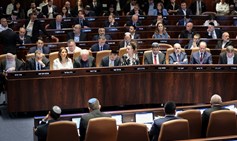
Judicial overhaul initiatives, along with other anti-democratic measures, have continued to be promoted by the government and the coalition in the Knesset. This document outlines the various actions taken in government that weaken the Israeli judiciary and democracy at large.

Judicial Reform – What Comes Next? PART 2 OF 2
מאת: פרופ' יובל שני,
In the second part of this two-part episode, Jack Omer-Jackman speaks to renowned Israeli legal scholar and IDI expert Professor Yuval Shany to discuss the Supreme Court’s upcoming deliberations on the legislation annulling reasonability; the significance of basic laws; the impact of reservists’ protests on Israel’s military preparedness and the role of a citizen army in a democracy.
Judicial Reform – What Comes Next? PART 1 OF 2
מאת: פרופ' יובל שני,
In the first part of this two-part episode, Jack Omer-Jackman speaks to renowned Israeli legal scholar and IDI expert Professor Yuval Shany to discuss the Supreme Court’s upcoming deliberations on the legislation annulling reasonability; the significance of basic laws; the impact of reservists’ protests on Israel’s military preparedness and the role of a citizen army in a democracy.

Appointment of Judges to High Courts in Democratic Countries: A Comparative Study
The research examined 42 countries included all the OECD member states along with other leading democratic countries.

Fighting the Judicial Reform for Zionism
מאת: ד"ר עמיר פוקס
The battle against the judicial overhaul is not being waged only to safeguard democracy, it is also a fight to preserve Zionism itself.
Why are Liberal Israelis so Terrified of Bibi’s Judicial Reforms?
מאת: פרופ' עמיחי כהן
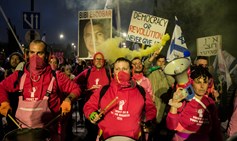
The proposed legislation evicerates the only check on executive and legislative power in Israel.

The Fight Over Judicial Appointments in Israel
Since 1953, judicial appointments in Israel have been made through a Judicial Selection Committee in which legal professionals—judges and lawyers—are in the majority and politicians in the minority. The new Israeli government’s plans for legal reform turn this system on its head and allow the coalition to fully control appointments to all parts of the judiciary, thus consolidating its dominant position in all three branches of government.

Completing Israel’s Constitutional Process
IDI is currently in the process of composing a revised proposal for a full constitutional arrangement for the State of Israel as it marks 75 years of independence.
Terms of Office of Supreme Court Justices
מאת: ד"ר גיא לוריא
In Israel, judges sit on the bench until they reach the age of 70, while advocates for changing the current method of their appointment often support the idea of limiting Supreme Court judges’ tenure.
Moment of Truth for Judicial Restraint
מאת: פרופ' ידידיה שטרן
Many Israelis attribute a left-wing bias to the Supreme Court and accuse it of extreme activism, but the hearings that were broadcast live highlight the vast gulf between the Court's image and the reality

Court Systems Worldwide During the Coronavirus
מאת: ד"ר גיא לוריא
Israel is not the only country in which the court system has been curtailed, or had its activity modified, as a result of the coronavirus pandemic. Many countries are taking such measures, while at the same time striving to refrain from harming citizen's basic right of available access to courts.
Included are several examples from around the world.
Assault on Israel's Judicial System: The Angel of History is Watching Us
מאת: פרופ' ידידיה שטרן
Justice Minister Amir Ohana,has launched a fierce attack against the State Attorney’s Office. The Prime Minister who appointed him would be wise to remember that the angel of history is peeking over his shoulder.

No Female Pilots in IDF? – Get Over it!
New IDI Campaign to Warn Against Attempts to Decimate Supreme Court and Grant Unlimited Power to Politicians

Judicial Review Under Review
מאת: ד"ר עמיר פוקס
Israel’s judiciary is under assault, according to some, or experiencing a necessary corrective to rampant judicial activism, according to others. Dr. Amir Fuchs, legal expert and the head of the Defending Democratic Values project at the Israel Democracy Institute, walks through the Knesset’s attempt to change the judiciary and the balance of powers in Israel, what’s behind it, and what it means for the country.

A Lethal Virus
מאת: פרופ' ידידיה שטרן
"If indeed a member of the Judicial Appointments Committee was swayed by bribes, this constitutes the deepest possible subversion of the system and its legitimacy".

The Attack on Legal Oversight Threatens Us All
מאת: פרופ' ידידיה שטרן
Government-sponsored legislation proposing to change how ministry legal advisors are appointed has stirred up quite a storm. The idea should worry all of us, not only jurists.
What is the Public’s Opinion on the Override Clause?
A special survey conducted by the Guttman Center for Public Opinion and Policy Research at the
Israel Democracy Institute finds: The majority of the Israeli public fears that implementation of the Override Clause by the Knesset will give unlimited power to politicians and lead to an increase in political corruption

With Approval Of Mandelblit: Time to Consider Shortcomings of Outgoing Weinstein
מאת: ד"ר גיא לוריא
As Israel gets ready to transition to its new Attorney General Avichai Mandelblit, now is a good time to ask ourselves: Was Yehuda Weinstein a good Attorney General? An opinion piece by Guy Lurie, which originally appeared in the Jerusalem Post.

The Admissions Committees Ruling: A Lack of Ripeness or Refusal to Decide?
מאת: ד"ר עמיר פוקס
Dr. Amir Fuchs discusses the Israeli High Court of Justice's decision to uphold the "Admissions Committees Law," which allows small communities to reject applicants due to a lack of social suitability.

Mourning for Gazan Children Isn't Left-Wing
מאת: פרופ' מרדכי קרמניצר
IDI Vice President Prof. Mordechai Kremnitzer discusses the High Court of Justice's decision to uphold the Israel Broadcasting Authority's rejection of an infomercial in which the names of Gazan children who were killed in Operation Protective Edge would have been read aloud.

Education for Democracy as a Remedy for Violence
מאת: ד"ר עמיר פוקס
Attorney Amir Fuchs asserts that educating Israeli students regarding democracy and civics from a young age and throughout their education is the best way to prevent hatred, violence, and racism.

Only a Constitution will Ensure Good Governance in Israel
מאת: ד"ר עמיר פוקס
IDI researcher Attorney Amir Fuchs asserts that the only way for Israel to ensure good governance is by adopting a constitution.

Does Israel Need a Police Prosecution Department?
In an op-ed in <em>Haaretz</em>, IDI Vice President Prof. Mordechai Kremnitzer and Dr. Guy Lurie call for reform that will abolish the Police Prosecution Department, leaving the Police to investigate and the Public Prosecution to bring criminal charges.
A Truly Supreme Court
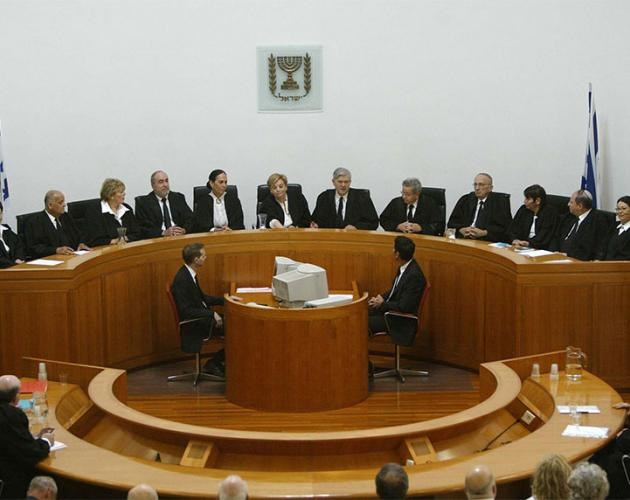
In an op-ed in TheMarker, IDI Vice President Prof. Mordechai Kremnitzer and Dr. Guy Lurie discuss the benefits of establishing a new appellate court between the district courts and the Supreme Court.
A Prime Minister Under Criminal Investigation
A summary of where the law stands regarding alleged wrong doing by the premier, as well as timely suggestions for reform, are in order.