

מאמרים, ספרים ואירועים בנושא Economy and Society
מאמרים

MKs Lapid; Gantz; Elkin; Lazimi: IDI’s Eli Hurvitz Conference Continues for its Second Day
מאת: The Israel Democracy Institute
Press Release | IDI Eli Hurvitz Conference 2025 | May 28
Innovation Meets Regulation: Israeli Tech Founders, Government Officials, and the Future of Civil Service, This Afternoon at IDI’s Eli Hurvitz Conference
מאת: The Israel Democracy Institute
Press Release | IDI Eli Hurvitz Conference 2025 | May 27, Afternoon Session
President Herzog; BOI Governor; MK Mansour Abbas; PMO’s Prof. Avi Simhon and Other Key Leaders Kick Off the Eli Hurvitz Conference
מאת: The Israel Democracy Institute
Press Release | IDI Eli Hurvitz Conference 2025 | May 27, Morning Sessions

In the Shadow of War: Aggregate Budget, Spending Priorities, and the Implications of an Increased Security Burden | Executive Summary
This study was released ahead of the Eli Hurvitz Conference on Economy and Society 2025.

Haredi Integration and Tax Payments – The Burden and the Potential | Executive Summary
מאת: גבריאל גורדון
This research was released ahead of the Israel Democracy Institute's annual Eli Hurvitz Conference on Economy and Society, 2025.

Cuts to the National Authority for Community Safety Harm National Security
Drastic budget cuts to Israel's National Authority for Community Safety jeopardize national security by eliminating essential violence prevention and community support services, disproportionately impacting vulnerable populations and exacerbating social instability.

Survey of the Financial Situation of Workers During the Iron Swords War
מאת: דפנה אבירם-ניצן, עומר כהן
This survey is the second in series taken since the outbreak of the Iron Swords War assessing the financial impact of the war on the Israeli workforce.

The Proposed "Softened Rabbis Bill" Complicates the Budgeting Process for Religious Councils
מאת: ד"ר אריאל פינקלשטיין
The recently proposed bill runs counter to accepted budgeting principles and undermines the autonomy of local governance.

Early Childhood Daycare Subsidies in Israel in Different Sectors
מאת: גבריאל גורדון,
A survey of daycare subsidies in Israel and recommendations for improved criteria that would encourage participation in the labor market among the ultra-Orthodox.

The Two Coalitions Israel Needs Now
מאת: יוחנן פלסנר
It is increasingly clear that Israel’s future depends on the forging of two coalitions. One is a multinational alliance determined to turn the Palestinian issue from a driver of conflict into an engine of peace. The other, is an internal Israeli coalition ready to pursue a series of bold social, economic, and political reforms.

Workforce Participation of Haredi Yeshiva Students Under the Exemption Age
מאת: גבריאל גורדון
This study describes the employment trends among men registered in ultra-Orthodox yeshivas between the ages of 18-25. The findings are based on a reported work, or "legal work," so it is very likely that this is an underestimation of reality.

Employee Skills in Israel: Overview and Gap Analysis
Technological advancements, rapid globalization, and structural changes in the Israeli economy over the past few decades have led to significant shifts in the demand for workers and in the tasks required of them, as well as in the characteristics of their skills and qualifications. This study offers insights on these questions using a variety of data sources and by employing two distinct empirical approaches.

Financial Aggregates and New Budgetary Priorities for Israel
מאת: פרופ' קרנית פלוג, Tzachi David, רועי קנת פורטל
In May 2023, the Knesset approved a two-year state budget for 2023–2024. However, following the outbreak of the war in Gaza and the accompanying conflict in the north, the budget's composition, safety cushions, and especially the priorities it reflects are no longer suited to Israel’s economic and geopolitical realities.

From the World of Torah Study to the World of Work: Social Challenges and Employment Potential Among Haredi Yeshiva Students
מאת: ד"ר אסף מלחי
This study was designed to assess the level of satisfaction among students in higher yeshivot (ages 17 and above), their personal and social challenges, and their attitudes toward possible alternatives to yeshiva studies, such as vocational training and employment.

I, Too, Have Come to my Senses: It is Time to Rethink the Haredi Role in Israeli Society
מאת: ד"ר רבקה נריה בן-שחר
Dr. Rivka Neriya-Ben Shahar proposes a model that resembles the secular educational system of colleges and universities to identify the most gifted torah scholars, who would receive a generous stipend. Others must rethink their role as part of Israeli society.

A More Targeted Approach to IDF Reservist Compensation
מאת: ד"ר כרמית פדן
Israeli reserve soldiers are making unimaginable sacrifices to protect their country. To rise to the challenge of meeting the IDF's expanded personnel needs, Israel's policy solutions must be as diverse as are the reservists serving this nation. A "one-size-fits-all" compensation approach will not cut it.

A Just Transition to a Low Carbon Economy
Implementing IDI's Israel 2050 program for emissions reduction is not only an urgent necessity, but also highly beneficial in economic terms.

Working from Home: Pre-and Post-Coronavirus
The coronavirus has made working from home much more prevalent, and has many advantages, including improving efficiency and providing workers with more flexibility. But how do we ensure that it does not increase wage disparities and provide even more advantages to those who are already the higher earners? IDI experts weigh in with recommendations to ensure that all sides benefit

Coronavirus and Unemployment in Israel
מאת: דפנה אבירם-ניצן
Daphna Aviram Nitzan presents an analysis of unemployment in Israel in the wake of the coronavirus pandemic.

The Coronavirus: Israel's Economy and Economic Policy
מאת: פרופ' קרנית פלוג
Prof. Karnit Flug's press briefing today focued on the Coronavirus’ effect on the Israeli economy and policies that could mitigate the damage inflicted by the pandemic.

The COVID-19 Crisis - Economic Impact and Economic Policies
מאת: פרופ' קרנית פלוג
What will be the economic ramifications of the coronavirus outbreak on the Israeli economy? Prof. Karnit Flug explains.

Karnit Flug Named William Davidson Fellow
The Israel Democracy Institute Names Former Bank of Israel Governor Karnit Flug William Davidson Fellow - new partnership will focus on ensuring Israel’s continued economic vitality.

The Israeli Economy: A Report Card
מאת: פרופ' קרנית פלוג
Prof. Karnit Flug, former Governor of the Bank of Israel and currently Vice President for Research at the Israel Democracy Institute, analyzes the strengths and weaknesses of the Israeli economy.

Human Capital in Israel
Developing human capital in Israel is the key to narrowing the labor productivity gap as a key to reducing income disparities
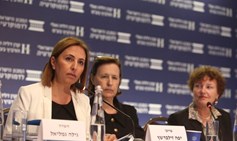
How Do We Adapt Our Labor Agreements to the 21st Century?
Eli Hurvitz Conference on Economy and Society – First Day, Second Session
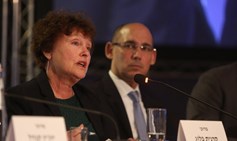
Ability to Make Economy Related Decisions Impaired
Prof. Karnit Flug, Vice President of IDI and Former Governor of the Bank of Israel spoke at the 2019 Eli Hurvitz Conference on Economy and Society: “With no government in place, the ability to make economy-related decisions is impaired. In the current situation, what is done depends entirely on what the Knesset Finance Committee is prepared to do."
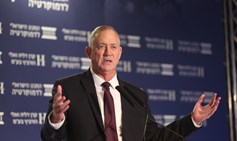
Israel is in Danger of Becoming a Weakened State
Benny Gantz, Chair of the Blue and White party and former IDF Chief of Staff spoke at the 2019 Eli Hurvitz Conference: "Government ministers bicker daily with the professional echelon - a situation that harms Israelis"
Israel’s Economy: Island of Stability with Troubling Trends
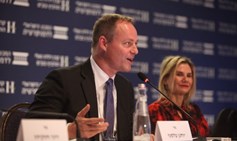
Yohanan Plesner, President of the Israel Democracy Institute and Prof. Eugene Kandel, CEO Start-Up Nation Central, open the two day conference, welcoming senior executives from the public and private sectors.

The Coming Capitalist Revolution
מאת: פרופ' ידידיה שטרן
Profit remains the ultimate objective, but the focus should be on profit for all those with a stake in a company, and not just its shareholders

Ease of Doing Business 2020 Index
In response to the Ease of Doing Business 2020 index that was published this morning, Daphna Aviram-Nitzan, director of the Center for Governance and Economics at the Israel Democracy Institute, who leads the regulation reduction project at the Institute, commented on Israel moving up 14 slots to the 35th place after 5 points improvement last year.
Quarter of the Population Gives Government's Policies a Failing Grade
Two and a half weeks ahead of the elections, a special IDI survey reveals that the Israeli public gives government economic policies a failing grade and supports increasing the budgets allocated to health, education, welfare, and public transportation services

The Next Destination of Young Ultra-Orthodox Couples
מאת:
How do young ultra-Orthodox couples cope with the housing crisis? The most recent figures on home-buying point to a change of the trend in the ultra-Orthodox internal migration. This change poses a challenge, but also an opportunity. How should the state respond?

Adapting to the Future Job Market
מאת: דפנה אבירם-ניצן, Aharon Aharon, By: Alan Rosenbaum
Reframing the eco-system to prepare for Israel’s job market of the future.

Climbing up the Socioeconomic Ladder: Military Service among the Ultra-Orthodox
מאת: ד"ר אסף מלחי
Even though military service seems to be one of the most blatant threats to the ultra-Orthodox lifestyle, it has become a rather attractive channel for broad segments of the community.

Israel Climbs Five Spots in the World Bank’s Ease of Doing Business Index
Israel improved by five spots over last year in the index of 190 countries. In first place is New Zealand, followed by Singapore, Denmark, Hong Kong, and South Korea. The Ease of Doing Business Index is an international indicator of how easy it is to do business in various countries.
Meet the Next Generation of IDI Leaders
מאת: Rachel Cohen, עו״ד אלונה וינוגרד , ד"ר נסרין חדאד חאג'-יחיא, דפנה אבירם-ניצן, ד"ר גלעד מלאך
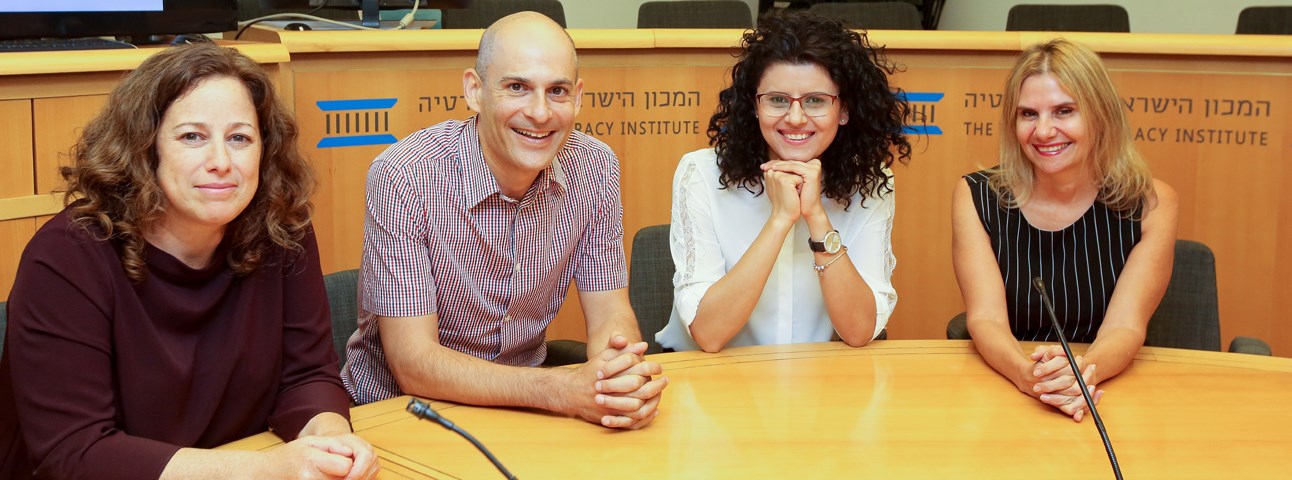
Guaranteeing an independent Supreme Court. Integrating the Ultra-Orthodox into the IDF. Boosting participation of Arab women in the workforce. Improving the ease of doing business in Israel. These are some of the challenges facing IDI’s new cadre of program and center directors.

Shabbat in the City
A recent law stripped local authorities of the power to decide on allowing commercial activity on Shabbat and handed it over to the Minister of the Interior, a development which was met with public uproar. Would it not be better to leave these powers in the hands of the municipalities, which act according to the profile of their resident population? Dr. Shuki Friedman makes the case for leaving these decisions in the hands of the local authority.

Survey of Public Attitudes on Economic Policy (June 2018)
On the occasion of this year’s Eli Hurvitz Conference on Economy and Society (June 19-20) the Israel Democracy Institute published a special survey to assess public opinion on Israel’s economic future.
Israel needs a Paradigm Shift: Greater Compatibility Between Human Capital and the Economy
מאת:
Israel suffers from a shortage of skilled workers in manufacturing industries and hi-tech and an overflow of the service sector; priorities in the allocation of public resources for the training of human capital must be changed to better fit the needs of the economy.
Israel’s future labor market needs updated models
מאת: פרופ' יותם מרגלית
The number of vacation days in Israel is among the lowest in the world. Research by Prof. Yotam Margalit presents a new model which will ensure a minimum of 18 vacation days for each worker.
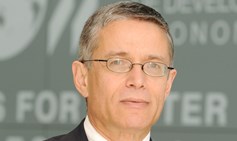
Top OECD Official: Israel Must do more to Integrate Arabs and ultra-Orthodox into the Economy
Dr. Peter Jarrett, the head of the Country Studies Division at the OECD, says the government must do more to integrate all Israelis into the economy if it is to continue to prosper and grow. "Boasting that Arabs and Ultra-Orthodox Aside, Israel's Situation is Excellent - is Simply shortsighted and Foolish."

Israel’s Looming Ultra-Orthodox Housing Crisis
מאת: ד“ר לי כהנר
The Minister of Finance has invested tremendous resources in meeting the needs of the Israeli middle class. However, even with these efforts, the minister has failed to address the ultra-Orthodox’s needs — a mistake that has contributed to an acute housing crisis for this sector of Israeli society.

For Arab Women in Israel, It's Just Not Working
Arab women - around 10% of the total population of Israel - barely participate in the workforce, far below the employment rate of Arab or even ultra-Orthodox men. Why?

A Decline in the Number of Ultra-Orthodox Men in the Workforce
מאת: ד"ר גלעד מלאך
For the first time since 2013- a decline in the number of ultra-Orthodox men in the workforce

Ultra-Orthodox and Affirmative Action: Justice and not Charity
מאת: ד"ר אסף מלחי
For the ultra-Orthodox sector and for us as a society, justice is not charity.

Living in Dignity
Our Democracy Index shows that while Israel’s citizens love their country and are optimistic about its future, they feel a lack of confidence about their personal futures.
Two Economies - One Society: New Survey
Survey to serve as backdrop for discussion at Eli Hurvitz Conference on Economy and Society – June 19 and 20

Flexonomics
מאת: Ilan Evyatar
In a dynamic labor market, challenged by technological disruption and increasing longevity, flexibility is key.

Bank of Israel's Karnit Flug: 'Ensure More Ultra-Orthodox Males Receive a Complete Secular Education'
srael's GDP is 40 percent lower than that of the U.S. and its level of productivity is 33% less than most OECD countries, according to a presentation by Dr. Karnit Flug, governor of the Bank of Israel.
Israel Democracy Institute's First-Ever Economic Survey
As the Israel Democracy Institute's annual Eli Hurvitz Conference on Economy and Society kicks off today in Jerusalem, IDI's Guttman Center for Public Opinion and Policy Research sheds new light on Israeli socioeconomic discourse.
Bank of Israel Governor Karnit Flug, Ministry of Finance Director-General Shai Babad to Headline Eli Hurvitz Conference on Economy & Society
Israel Democracy Institute's leading economic conference will focus on integrating innovation into the government, actuarial crisis,
and role of business press, among other topics

The High Price of Ignoring Poverty
מאת: ד"ר סאמי מיעארי
Following the publication of the Poverty Report, Dr. Sami Miaari points out the large percentage of Arab Israelis that live in poverty. He says the current situation requires a new strategy and economic investment on several levels simultaneously. This article first appeared on Times of Israel.

Shemitat Kesafim: The Year of Escape from Debt
מאת: פרופ' בני פורת
Dr. Benny Porat discusses the precept of debt cancellation during the sabbatical year (Shemita) and proposes ways in which to update this practice to suit the economics of contemporary Israel and create a model society.
Shmita: Rest, Share, Release
מאת: פרופ' ידידיה שטרן
An exploration of the existential, social, and economic dimensions of the Shmita year, that calls for bringing together social, moral, cultural, religious and national forces to implement the idea of Shmita in non-agricultural and national contexts in Israel.

Integrating the Ultra-Orthodox
מאת: Andrew Friedman
To facilitate the entry of haredim into academia and the workforce, the state and private industry have invested hundreds of millions of shekels in recent years to create ultra-Orthodox frameworks to support individuals who are looking for academic education and employment while also remaining loyal to their cultural mores. As a result, nearly 80 percent of ultra-Orthodox women are now employed, on par with secular Jewish Israeli women.
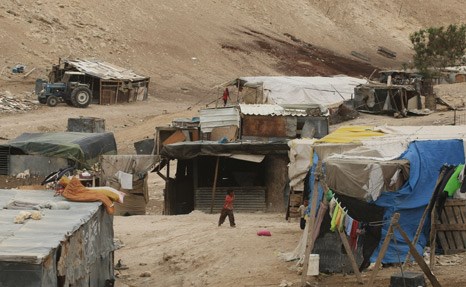
Regulating Bedouin Settlement: A Disengagement Plan for the Negev
מאת: Ronit Levine-Schnur
Ronit Levine-Schnur analyzes the Bill to Regulate Bedouin Settlement in the Negev 5773–2013, warns that it seems to be motivated by an exaggerated fear of a Bedouin takeover of the Negev, and offers an alternative approach.

Ultra-Orthodox Conscription: Making It Work
מאת: Momi Dahan
Will the High Court of Justice’s refusal to extend the Tal Law indeed reduce the inequality of burden sharing in Israeli society? IDI Senior Fellow Prof. Momi Dahan does not think so, and argues that ultra-Orthodox Jews in Israel should be exempted from the army and allowed to work, so as to assume their fair share of the tax burden.

A New Social-Economic Agenda for Israel
מאת: Momi Dahan
In an op-ed, originally published on the Ynet website, IDI Senior Fellow Dr. Momi Dahan reflects on the wave of social protest of the summer of 2011 and stresses that the response to the protest must be a new social-economic agenda.
Before the Next Shock Hits
מאת: פרופ’ אבי בן בסט
In this article, originally published in Haaretz on April 1, 2010, IDI Senior Researcher Prof. Avraham Ben-Bassat warns that Israel's policy of reducing taxes should be frozen since it may precipitate an economic crisis, and advocates giving preference to increasing public spending while preserving the economy's stability.
Value in Doing Business with Israel
מאת: Barak Cohen
Despite last summer's war in Lebanon, Hamas's rise to leadership, Hizbullah rockets being aimed at Israeli cities, and international boycotts, Israeli economy is thriving, the national debt and unemployment have significantly dropped, and investors continue to look to Israel as fertile ground for investment.

Active Labor Market Policy Must Become Priority
מאת: פרופ' יותם מרגלית
For Israel's economy to grow, significant investment in building a strong and effective infrastructure for occupational training and reemployment is critical.
Eli Hurvitz Conference on Economy and Society
With the featured participation of: Bank of Israel Governor, Education Minister, Economy Minister, Director-General of the Finance Ministry, Director-General of the Prime Minister Office, Chairman of the Histadrut Labor Federation, Director-General of Bank Leumi, Director General of Microsoft Israel and other VIPs

Professor Eytan Sheshinski joins the Israel Democracy Institute (IDI) as a Senior Researcher in the Center for Governance and the Economy
Top Israeli economist, Professor Eytan Sheshinski, has joined IDI as a senior researcher in the Center for Governance and the Economy, under the leadership of Dafna Aviram-Nitzan.